Inside the Future Frame Workbook

A complete 10-chapter personal growth system for Classes 6 onwards — structured like a personal life coach on paper

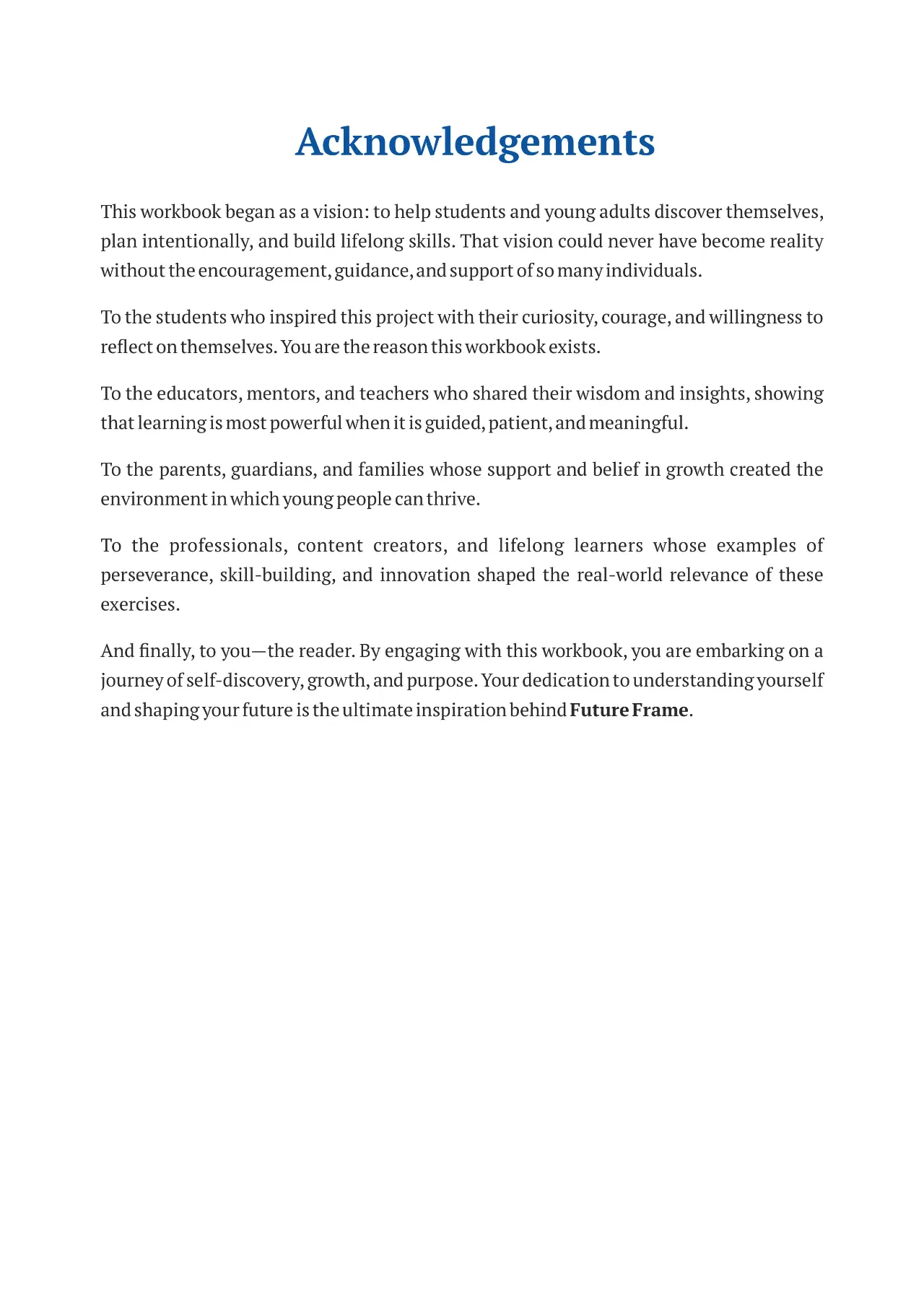
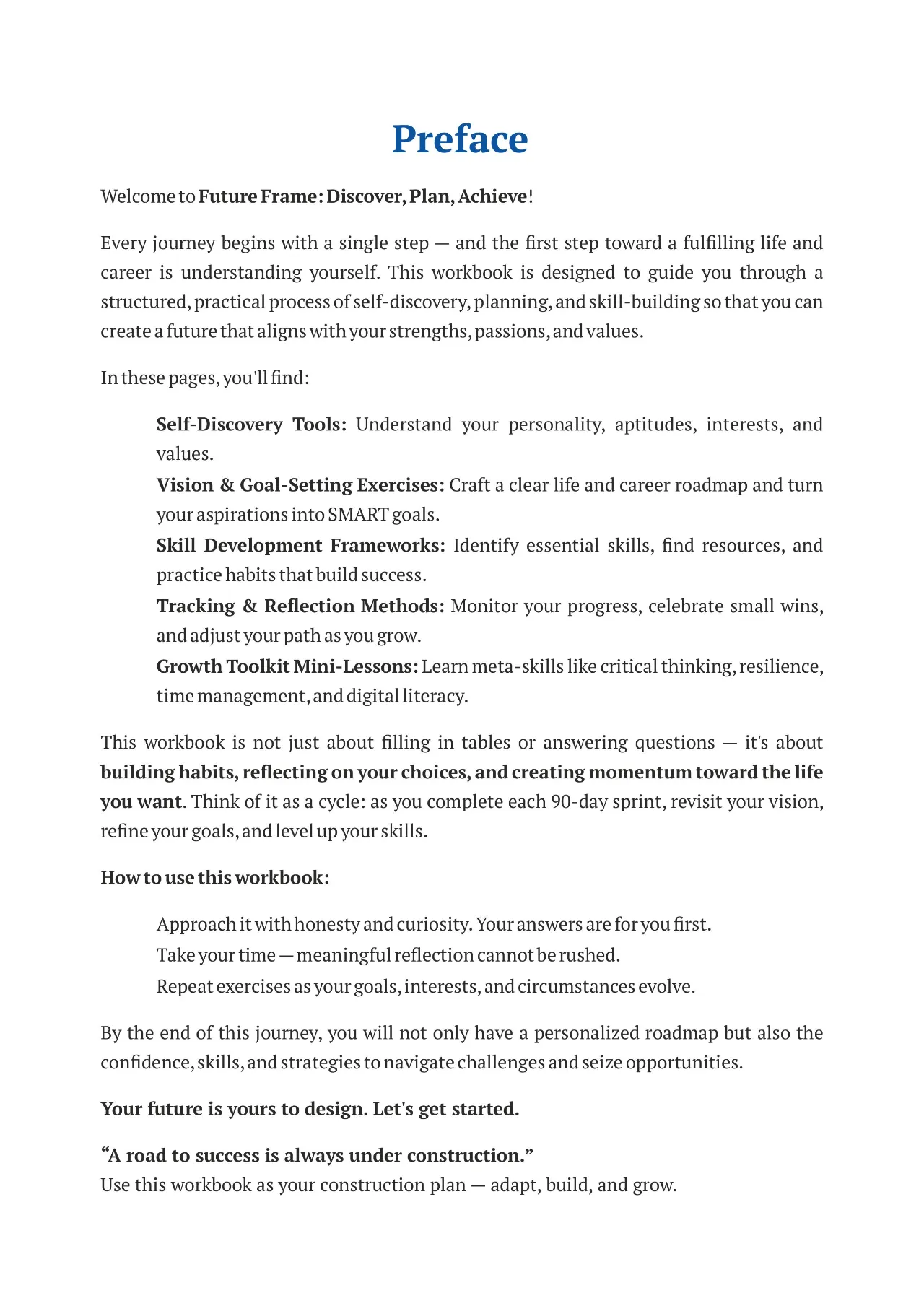
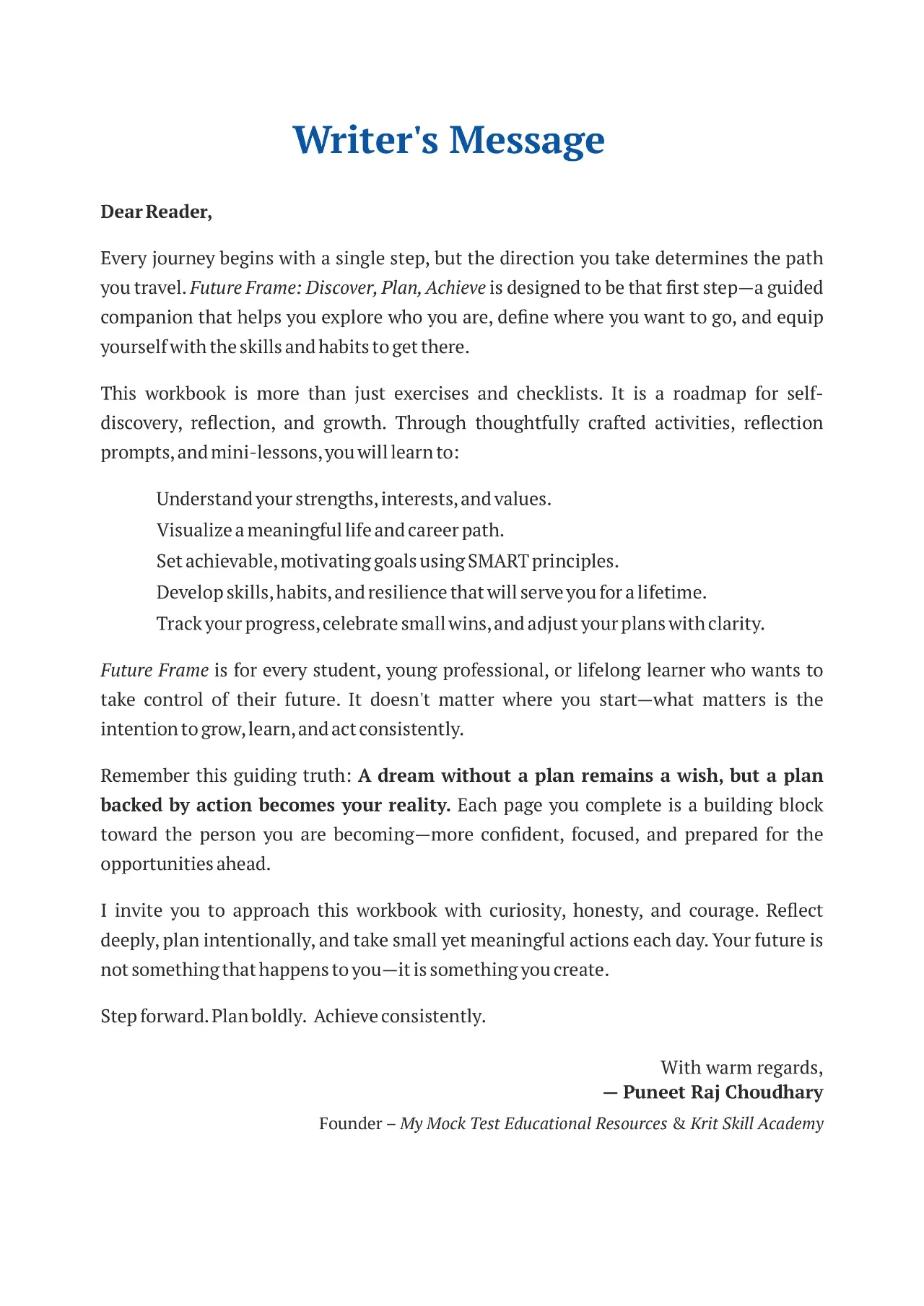
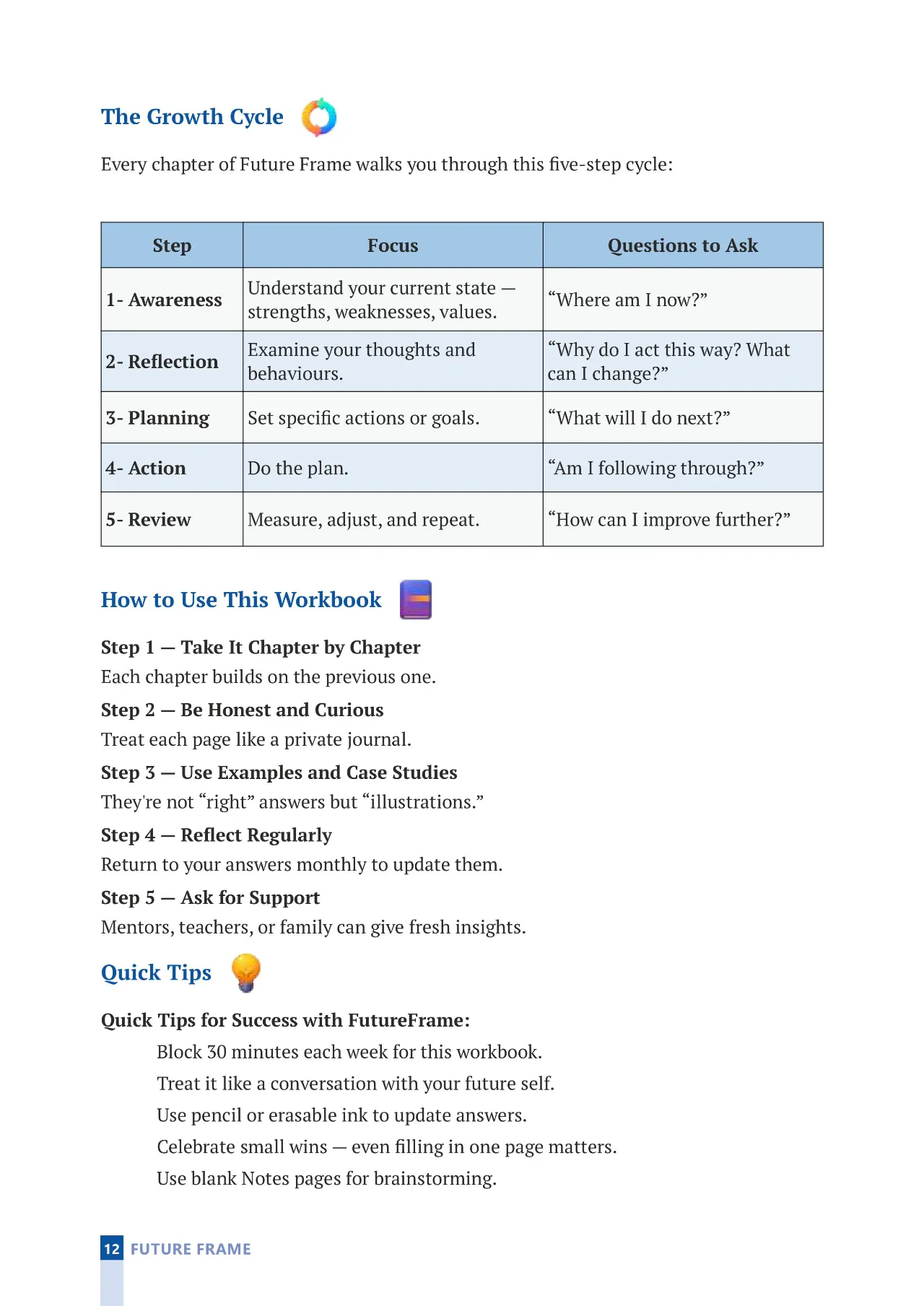
The Future Frame workbook is not a collection of activities — it is a carefully engineered journey that guides students through deep self-understanding, emotional growth, academic discipline, behaviour refinement, vision-building and future readiness.

Each chapter progressively strengthens the learner’s inner world.

Why the Workbook works

  • Structured — one chapter builds on the next.
  • Reflective — students understand themselves deeply.
  • Practical — habits, goals, routines and emotional skills.
  • Simple, guided prompts that create deeper thinking.
  • Grounded in psychology — reflection, metacognition, self-regulation.
  • Aligned with NEP, NCF, CBSE SEL/HPC, ICSE and CAIE.

It helps students move from confusion to clarity, inconsistency to discipline, stress to balance, self-doubt to confidence and from pressure to purpose.

A complete life-skills and personal-growth system—inside a single workbook.
Fixed Chapter Architecture

A Consistent Thinking System Used in Every Chapter

Every chapter in the Future Frame Workbook follows the same structured learning architecture. This consistency ensures students don't just complete activities - they learn a repeatable system for thinking, planning, and self-management.

1. Chapter Purpose - Why This Matters

Each chapter opens by explaining why the capability being developed-such as self-awareness, planning, discipline, or habits-matters in real student life. Learning is grounded in thinking and behaviour, not emotion, so relevance is established before any activity begins.

2. Concept Frame / Science Lens

Students are introduced to brief, research-informed ideas related to reflection, metacognition, habits, goal-setting, and cognition. The language is simple, age-appropriate, and strictly non-clinical.
There is no diagnosis, counselling, therapy, or labelling at any point.

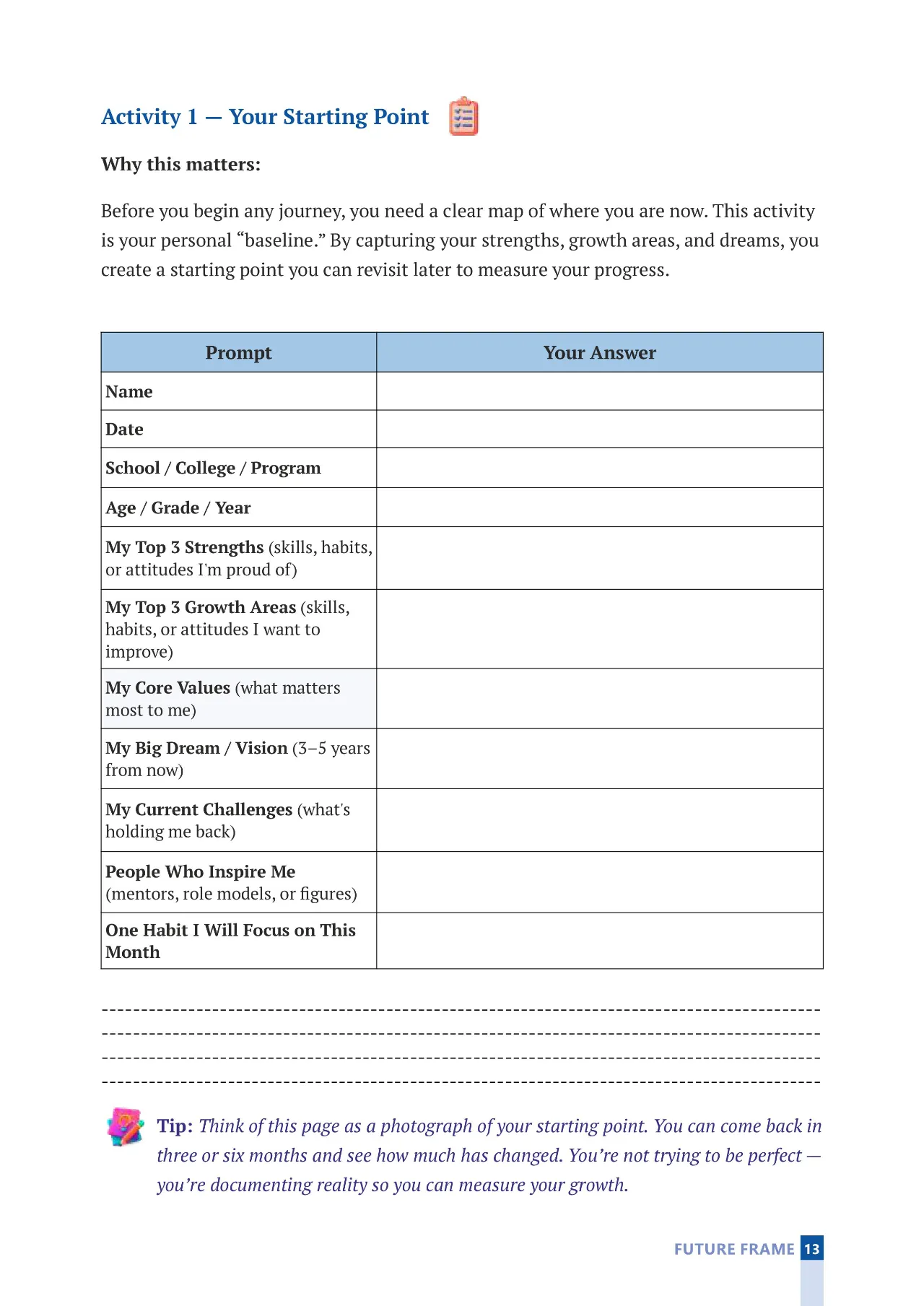
3. Guided Activities (Writing-Based)

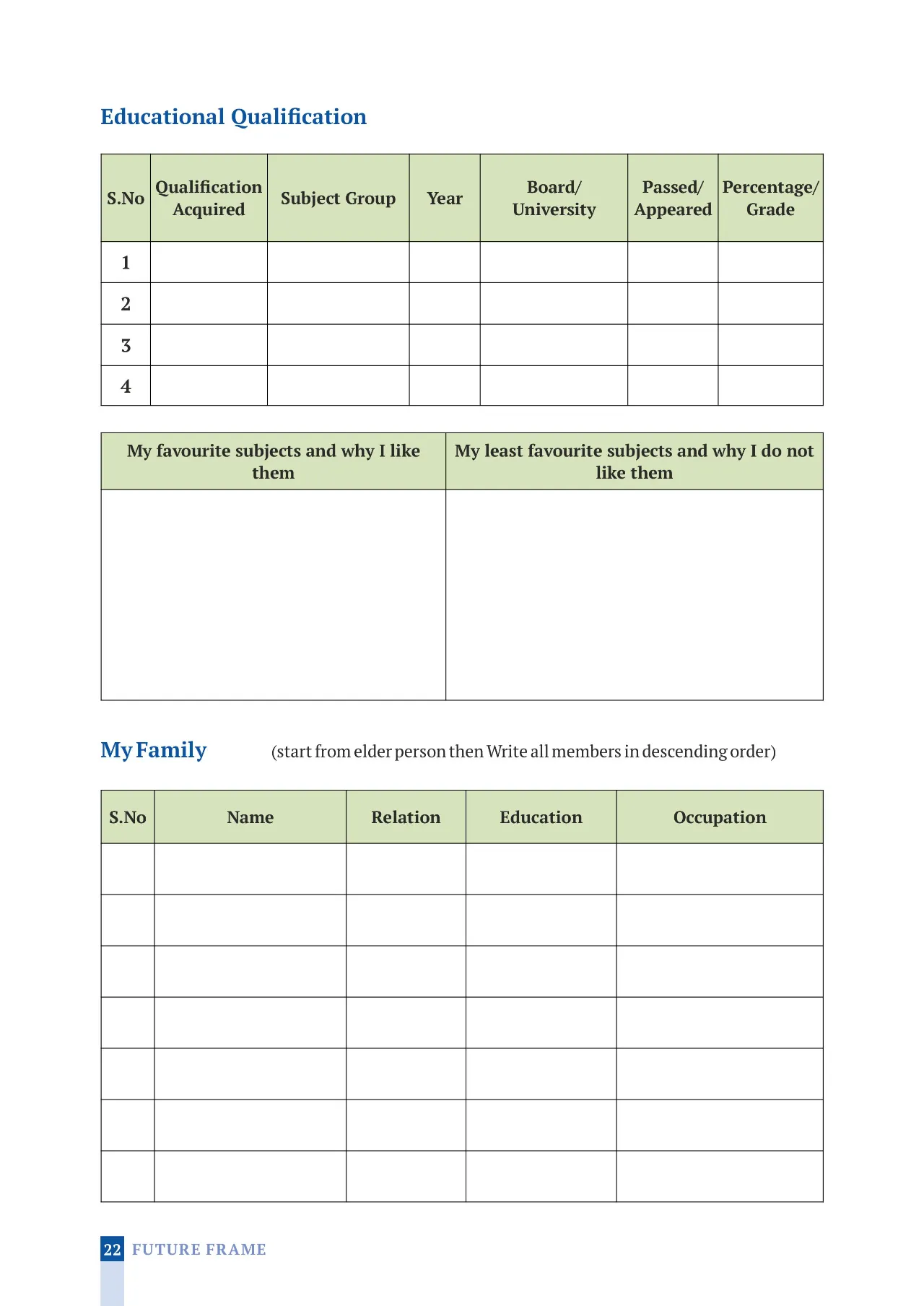
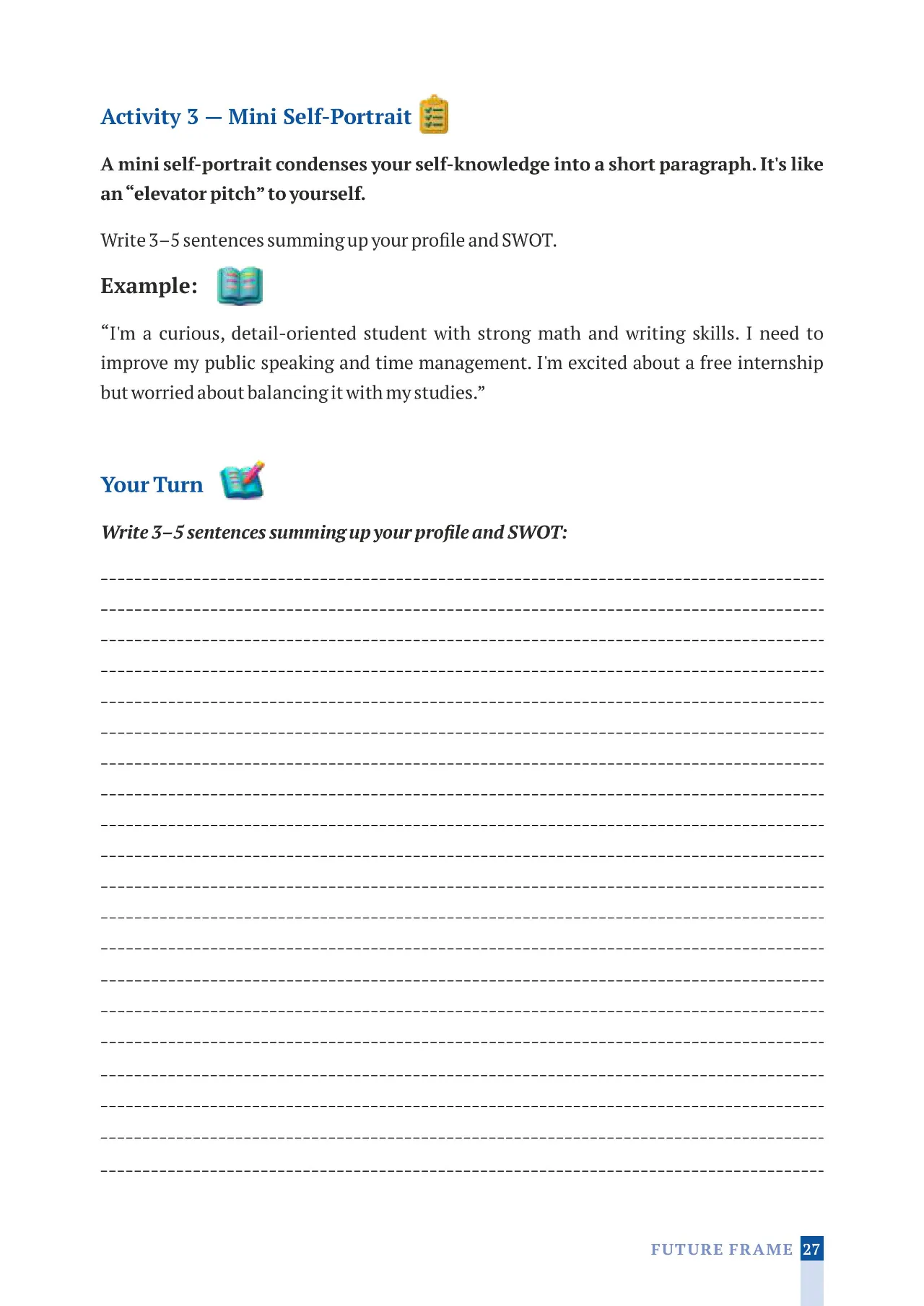
Each chapter uses structured, student-friendly tools-such as planners, trackers, profiles, and audits-that require students to write their own data, think on paper, and record decisions. The workbook never provides answers; it is intentionally designed to make students generate their own thinking.

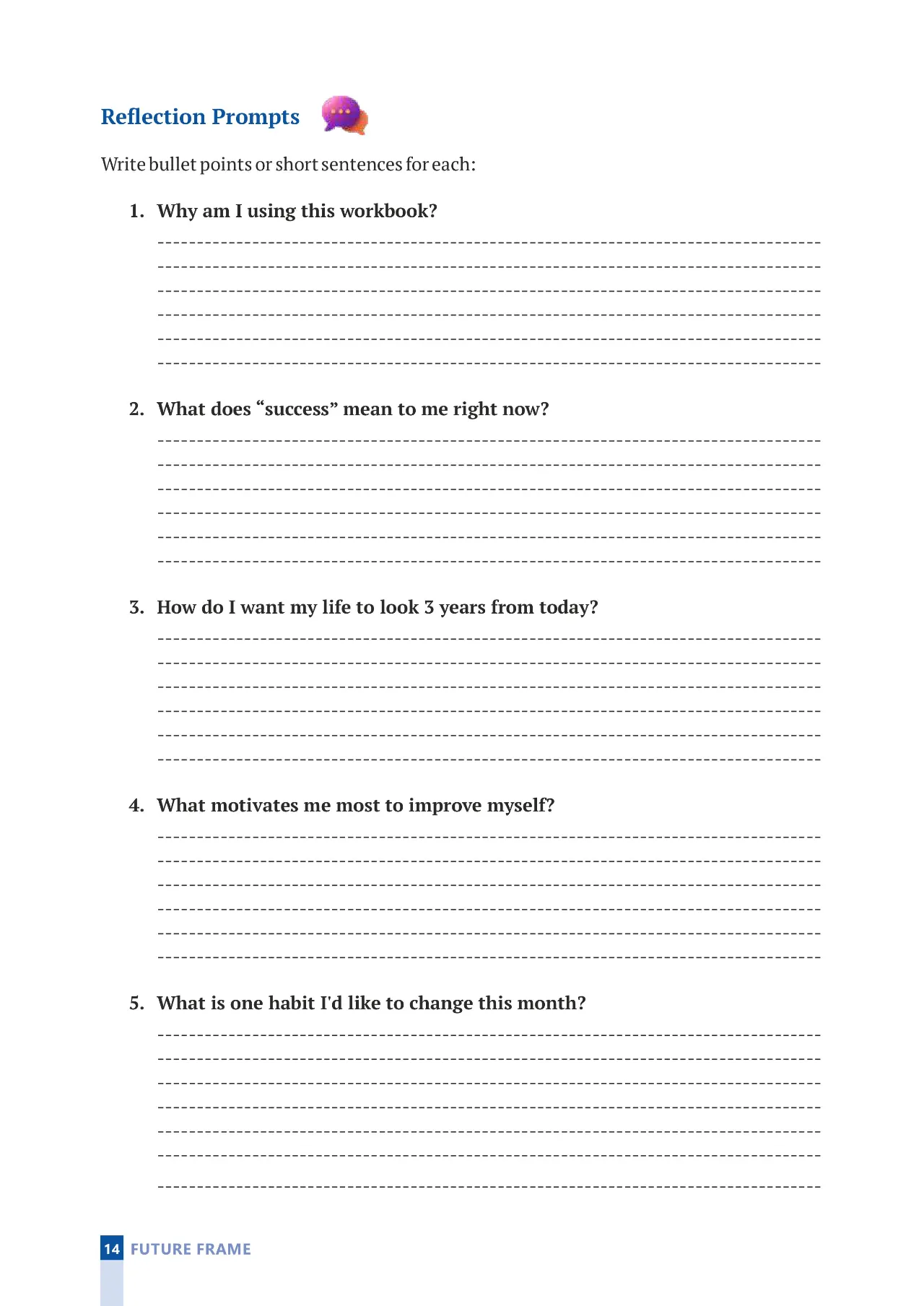
4. Reflection Prompts

Short written reflections appear throughout every chapter, guiding students to examine why something happened, what changed, and what they learned. This repetition builds reflection as a habit.

Behaviour does not change through advice. It changes when students externalise thinking on paper and review it repeatedly. This is executive-function training.

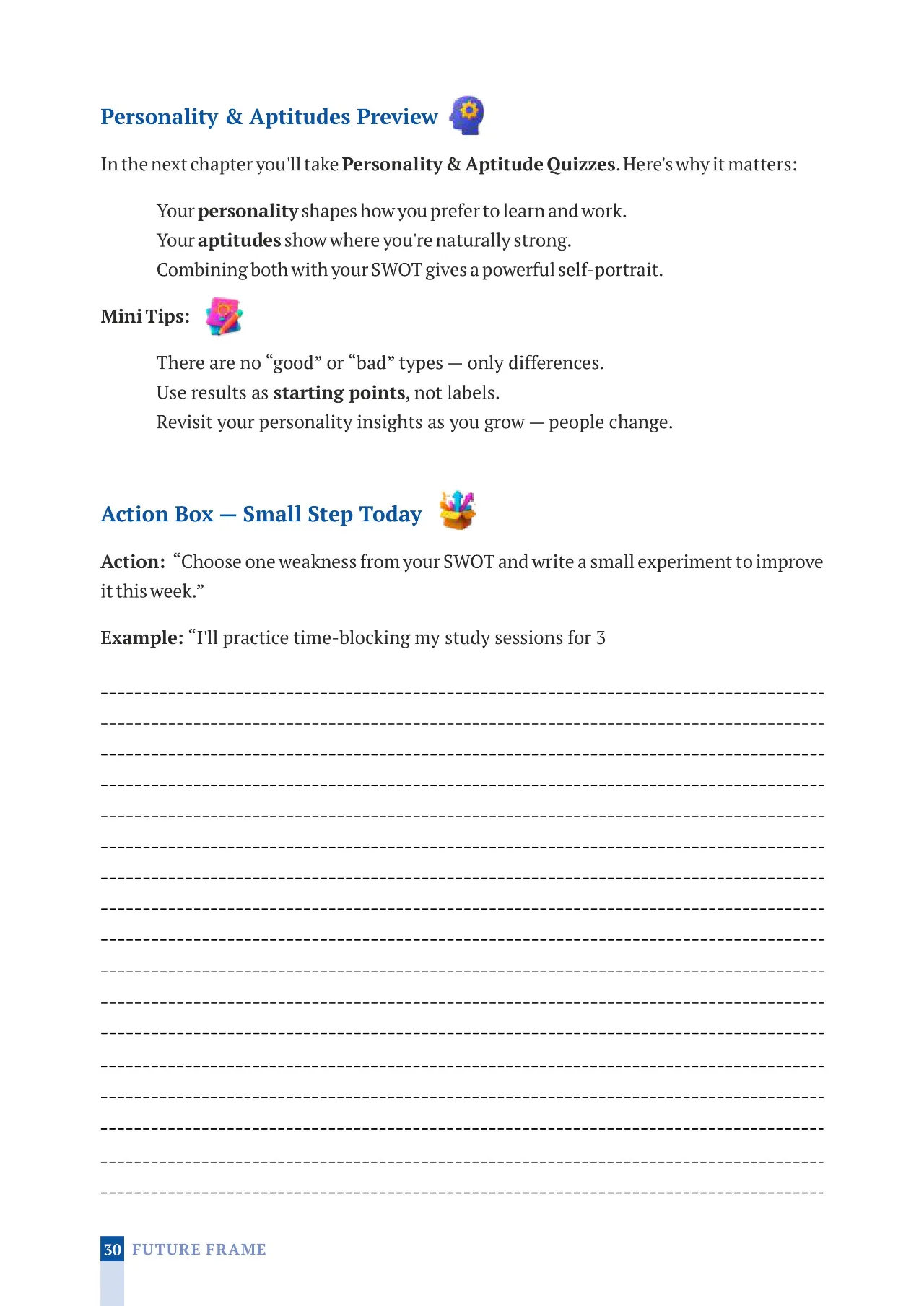
5. Action Box - Small Step Today

Each chapter includes a single, time-bound micro-action written by the student. The emphasis is on action over intention and systems over motivation. Change is built through small, repeatable actions, not pressure.

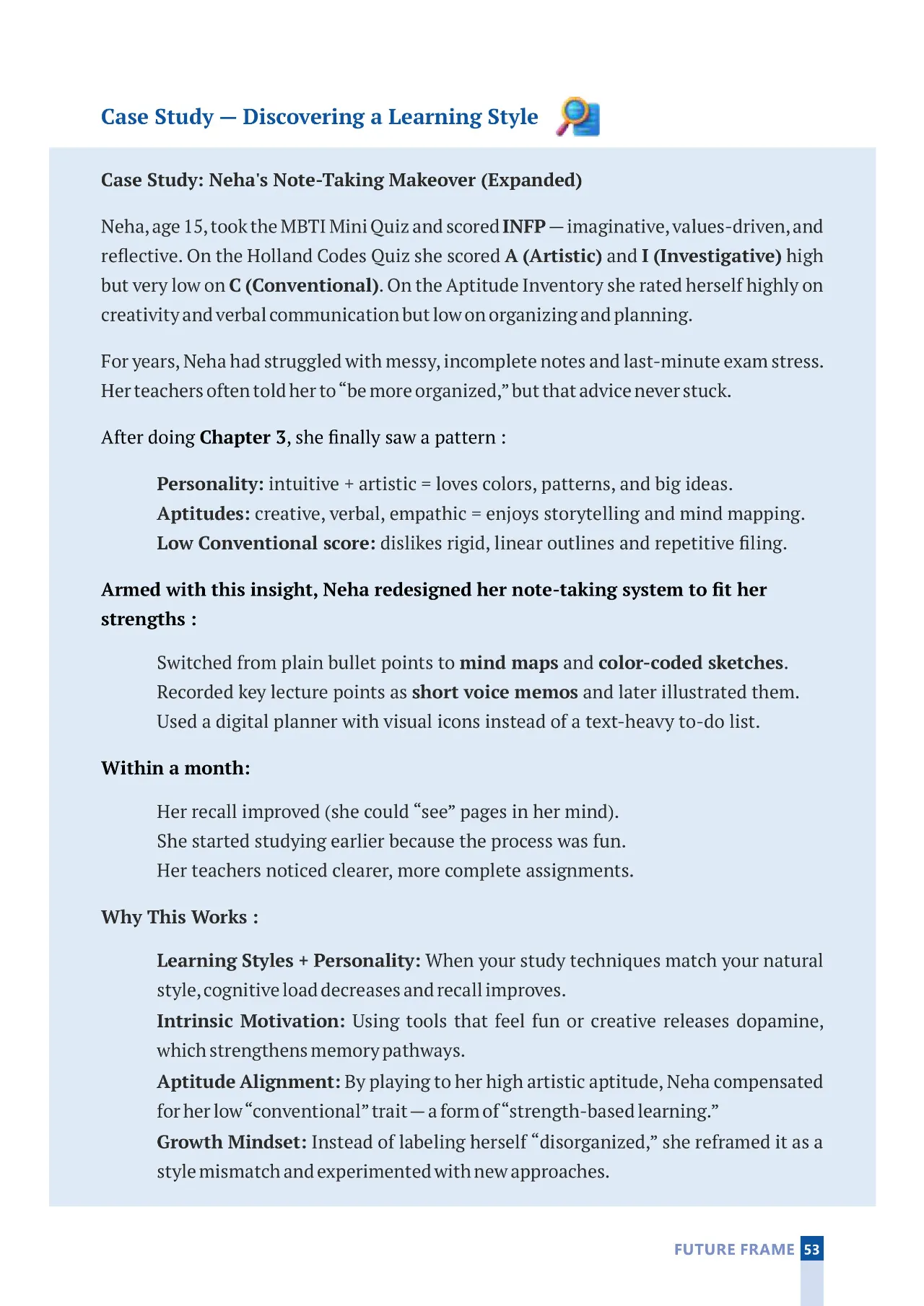
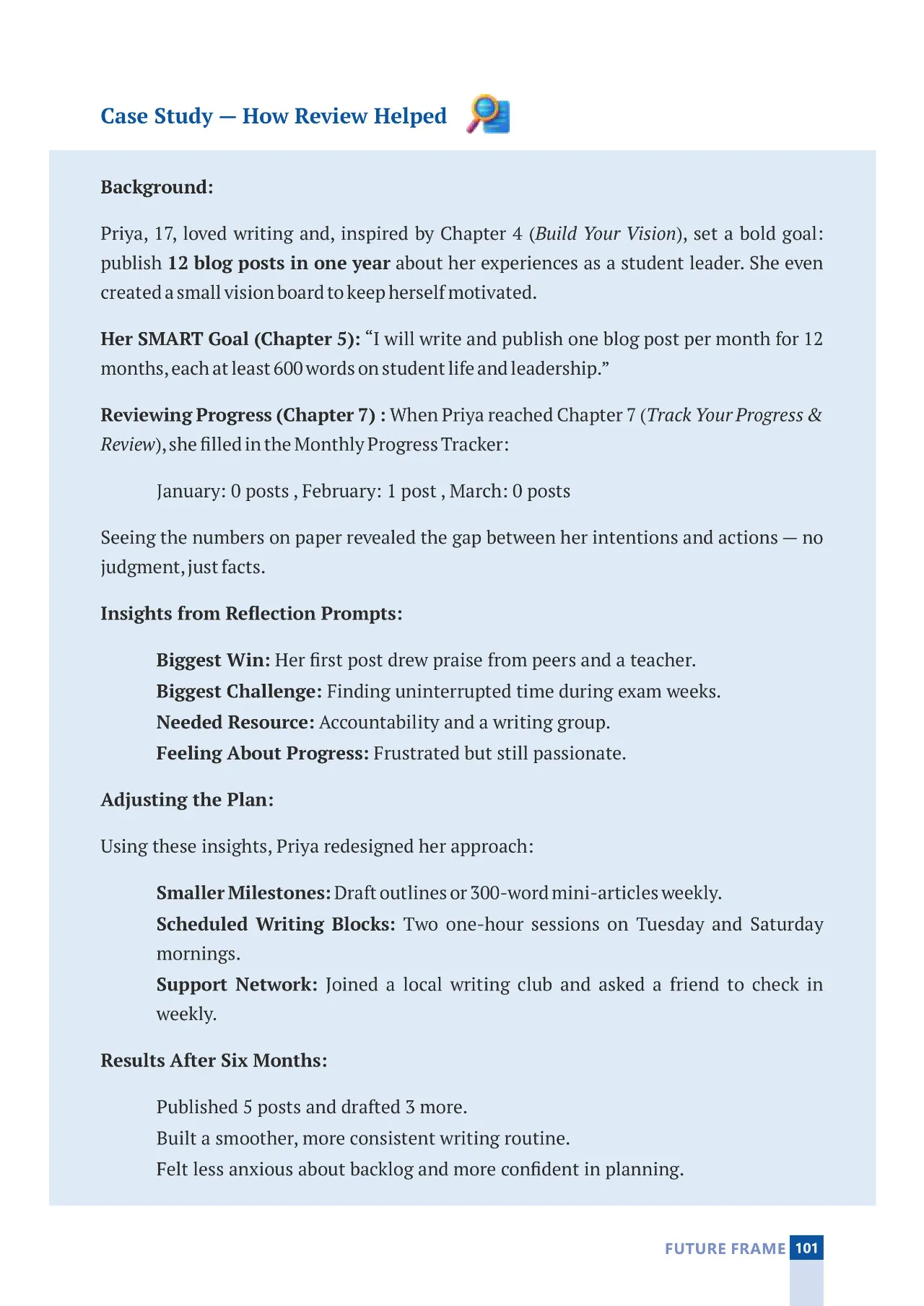
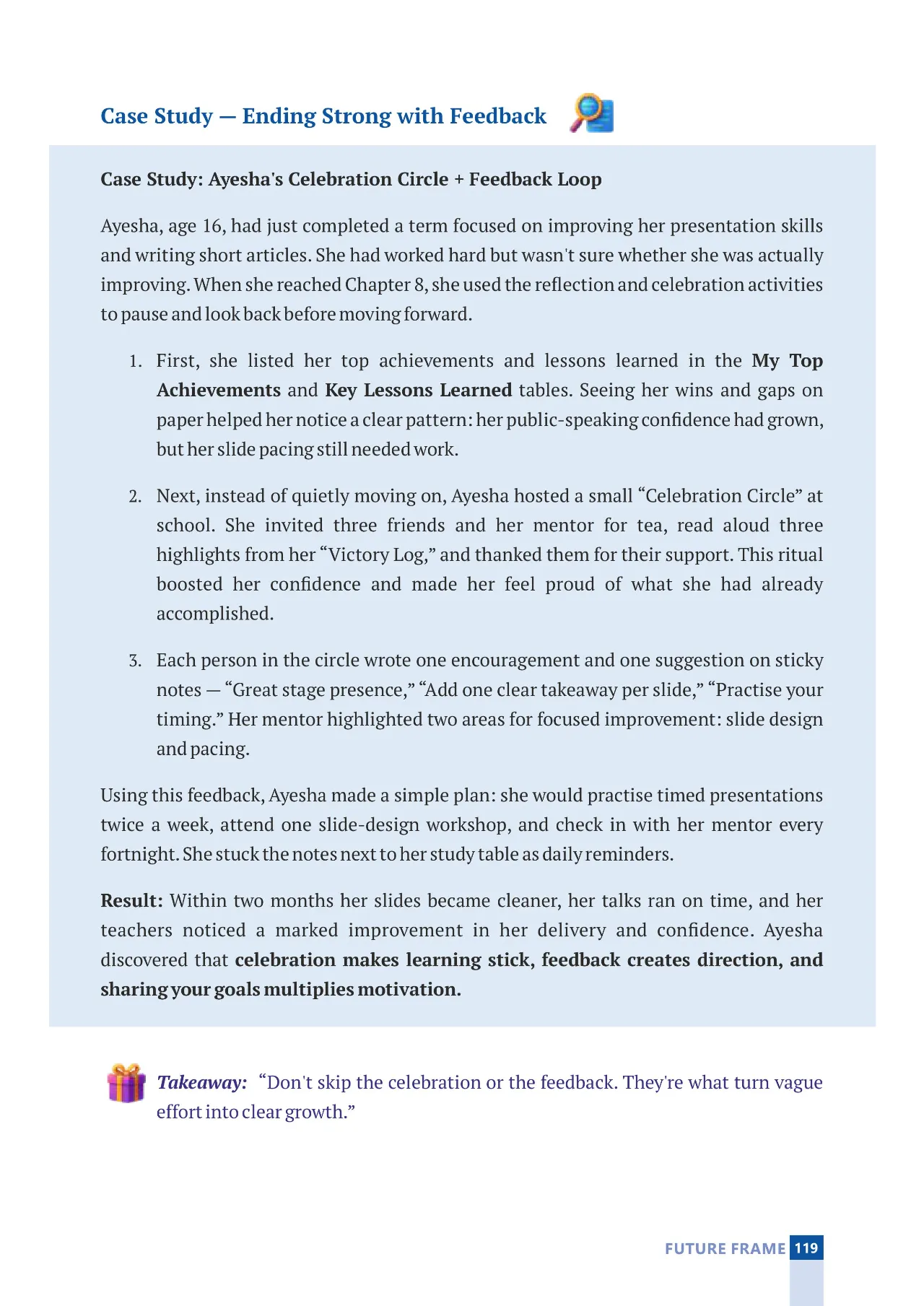
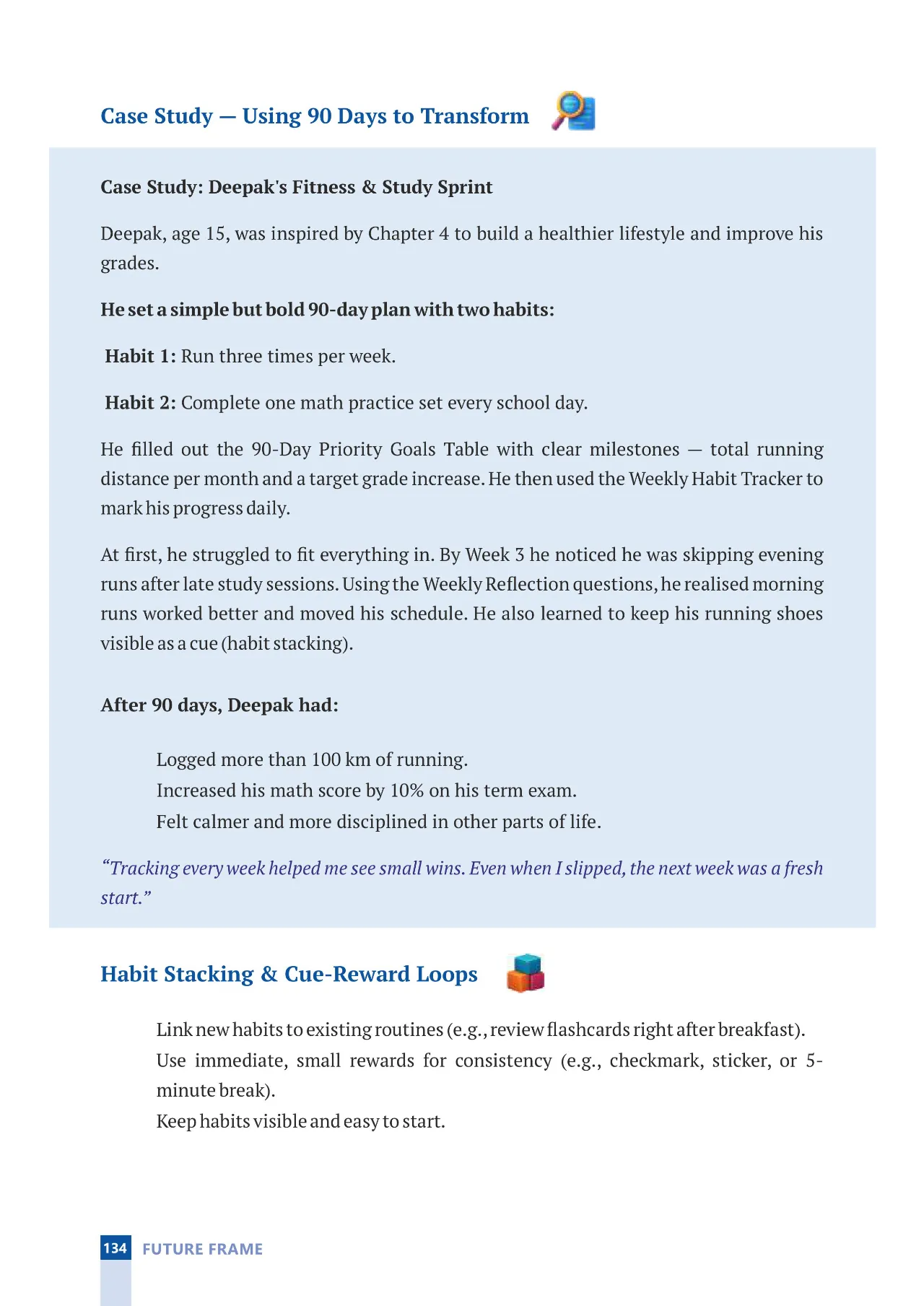
6. Case Study - Applied Example

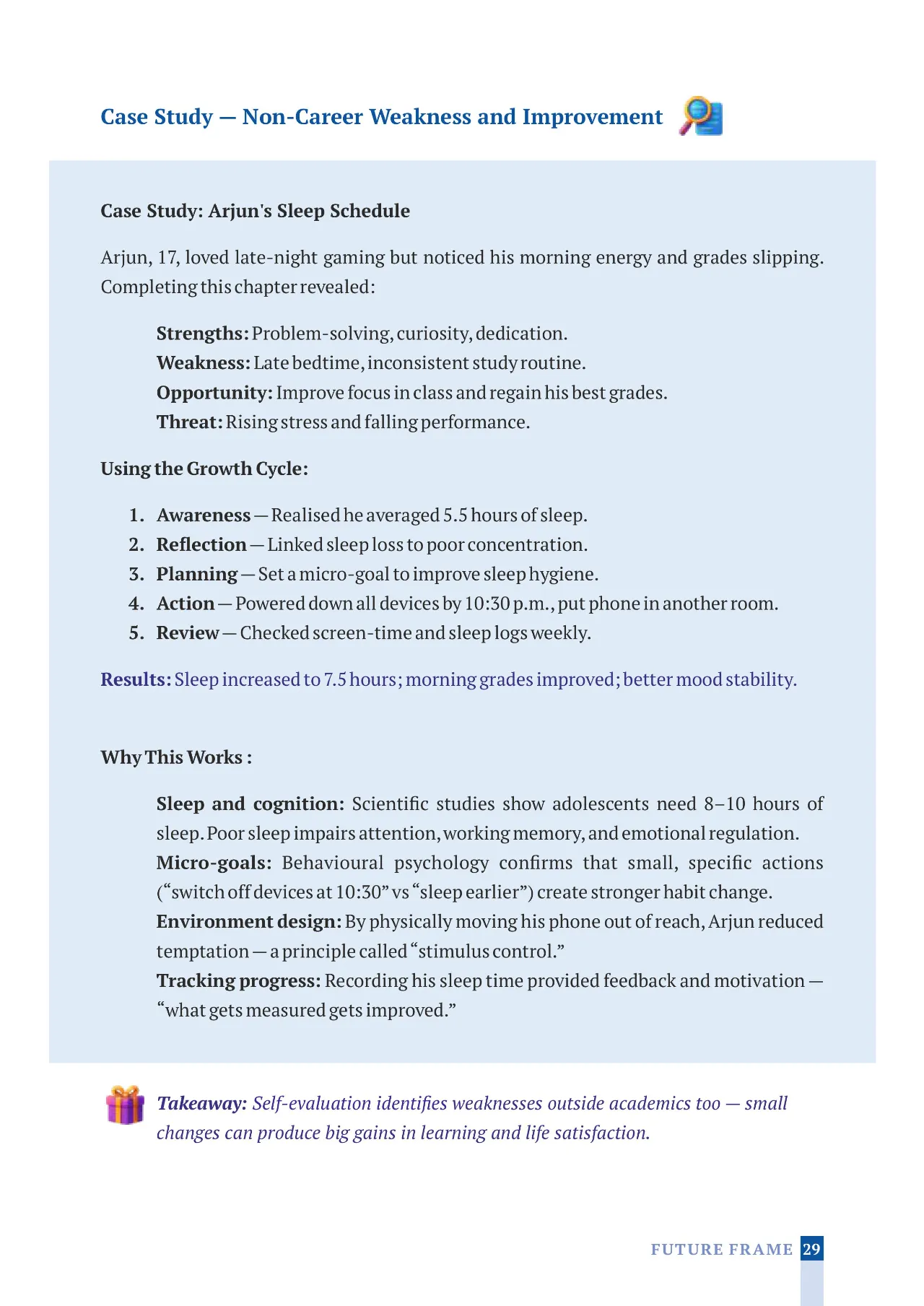
Every chapter includes at least one clearly labelled case study, placed after students complete the thinking tools. These are behavioural illustrations tied directly to the chapter activities-not fictional stories or motivational content. Their purpose is to validate application, not to inspire emotionally.

7. Why This Works-Key Takeaway

Each chapter closes the loop by explaining what changed, why it worked, and which system produced the result. This explanation draws on established principles of habit formation, behavioural psychology, environmental design, brain function, and feedback-strengthening learning transfer from the page to real life.

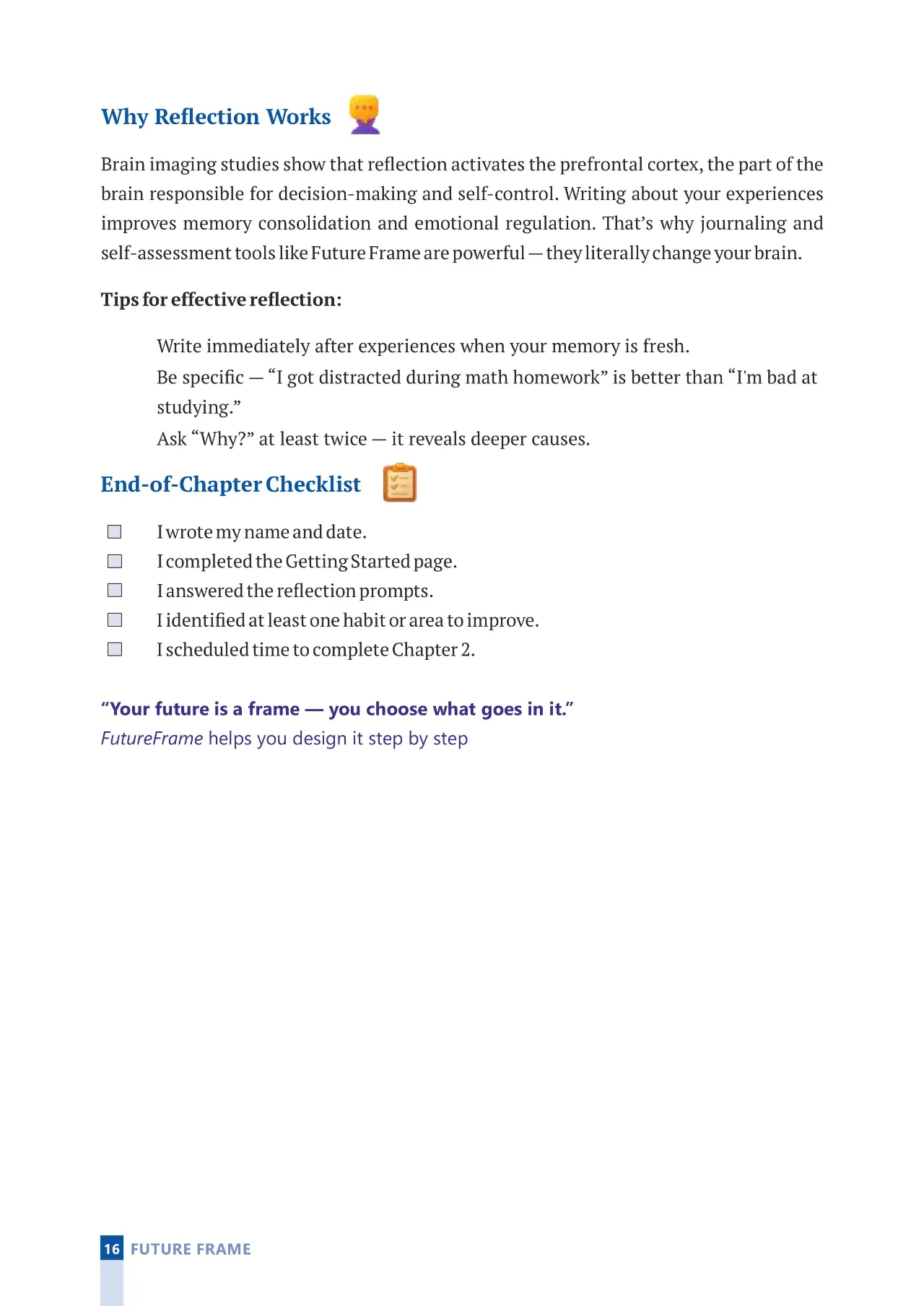
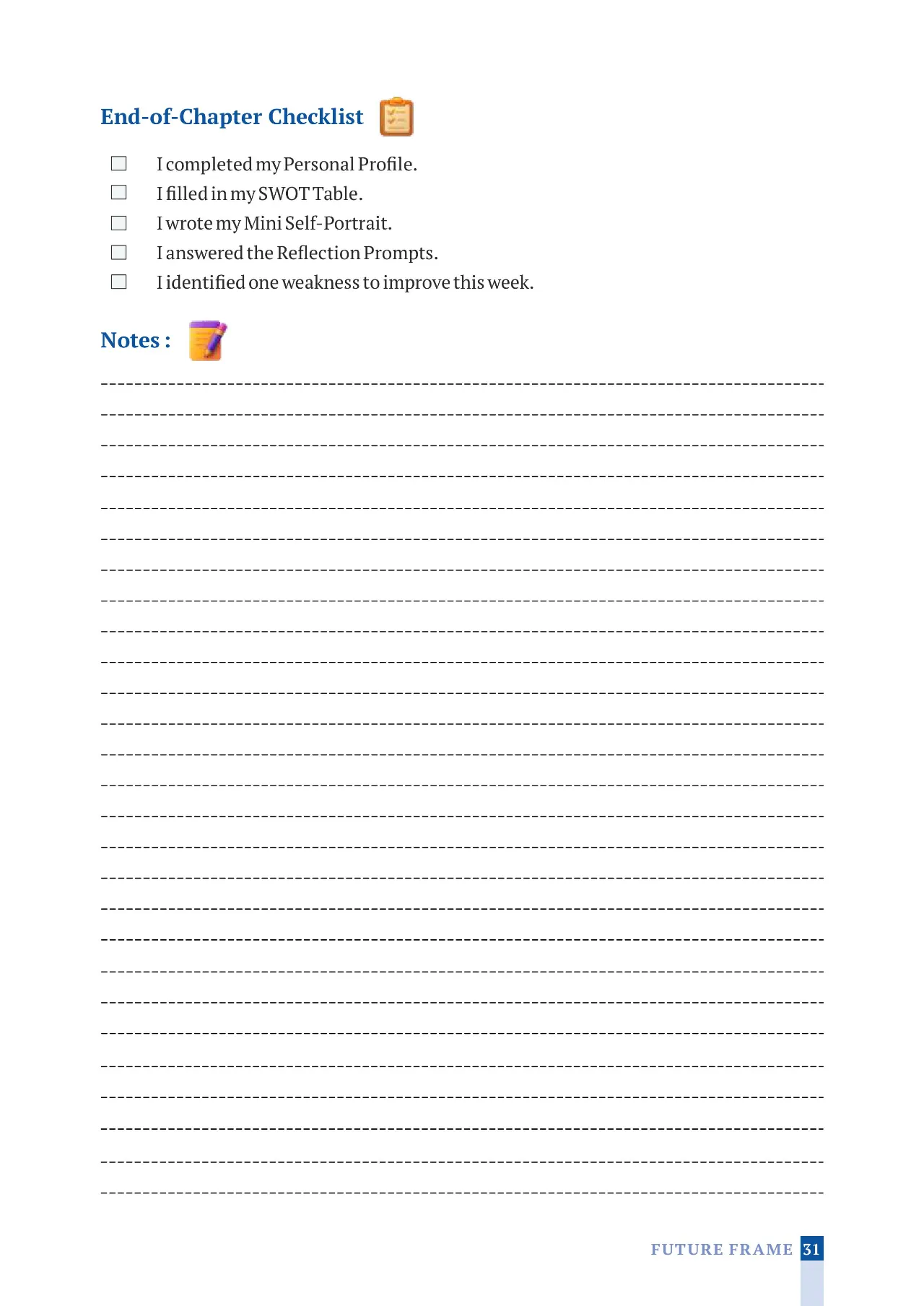
8. End-of-Chapter Checklist

Each chapter ends with a student-completed checklist that reinforces responsibility, closure, and self-monitoring. No teacher correction, grading, or evaluation is required.

Why This Structure Matters

Because the same thinking system is used in every chapter, students don't just complete a workbook-they learn a lifelong process for self-reflection, planning, disciplined action, and course correction. That is why one Future Frame workbook works consistently across classes and supports long-term student

Chapter Journey & Learning Outcomes

What students experience across the workbook

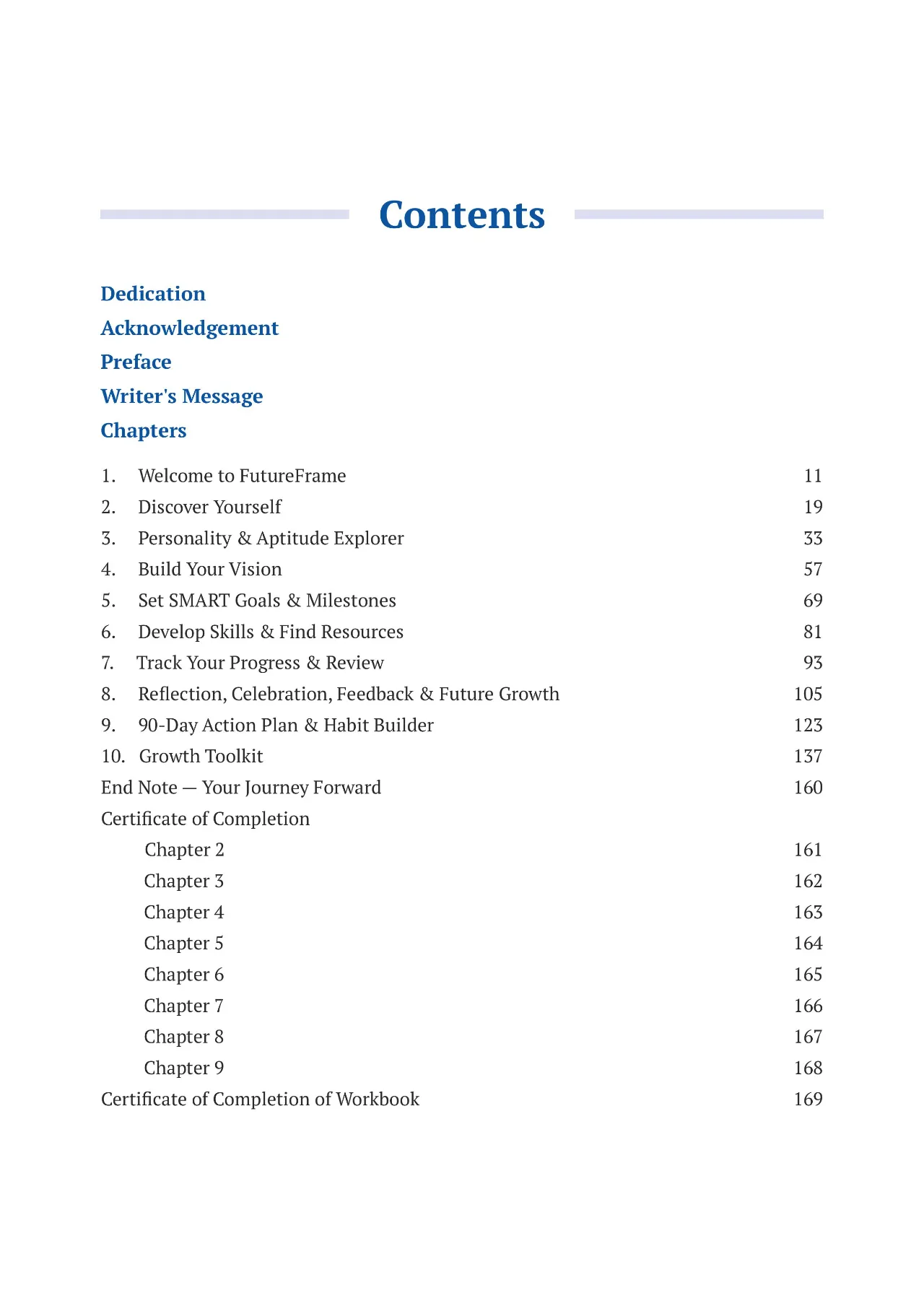
Chapter 1 — Welcome to Future Frame (Your Journey)

Students discover the power of self-awareness, the Growth Cycle (Discover → Plan → Act → Reflect), the science behind reflection and metacognition, and why emotional intelligence matters more than ever. They learn how habits shape identity and how to use the workbook effectively.

Outcome : Students feel motivated, grounded and ready to begin a meaningful journey.

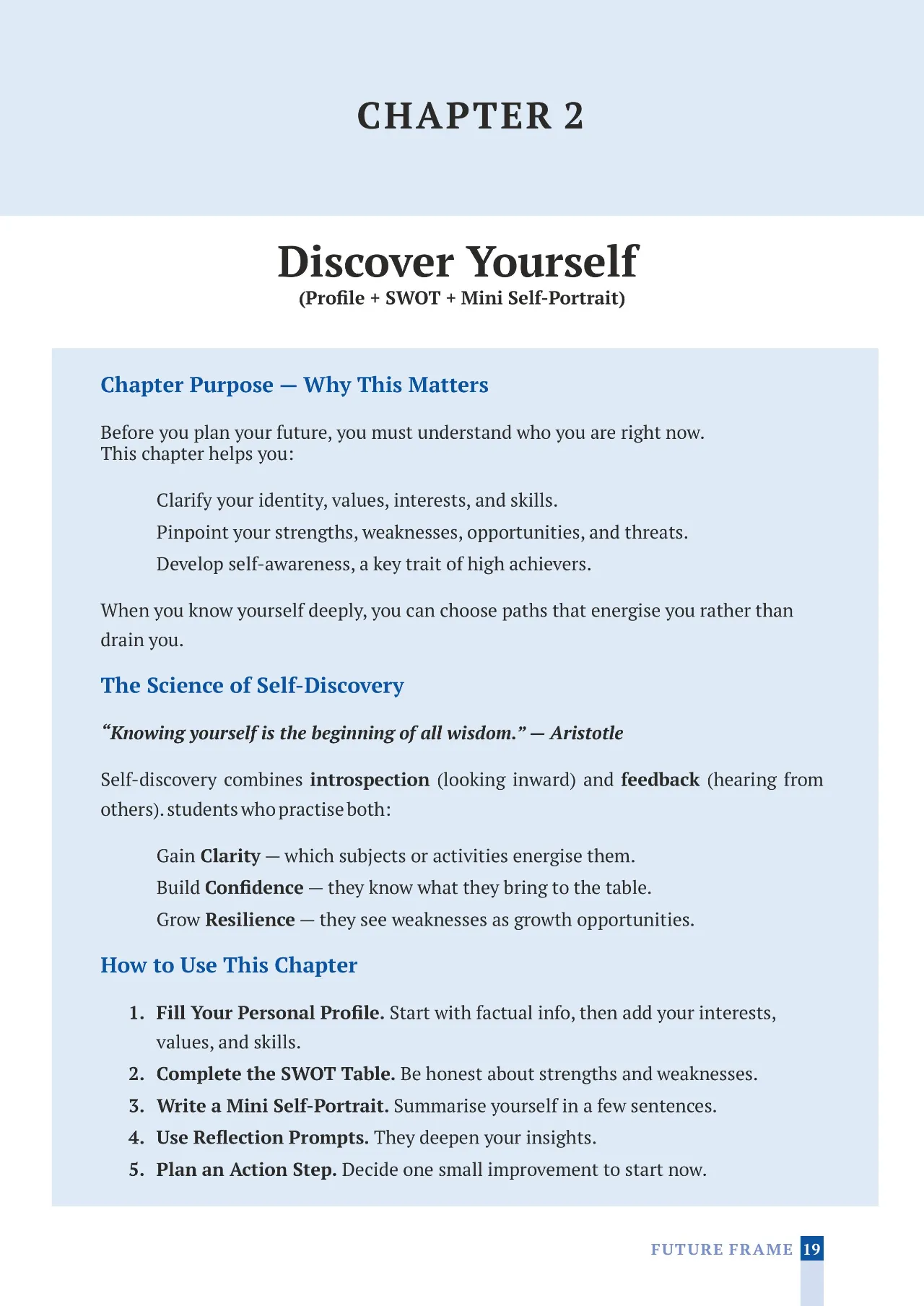
Chapter 2 — Discover Yourself

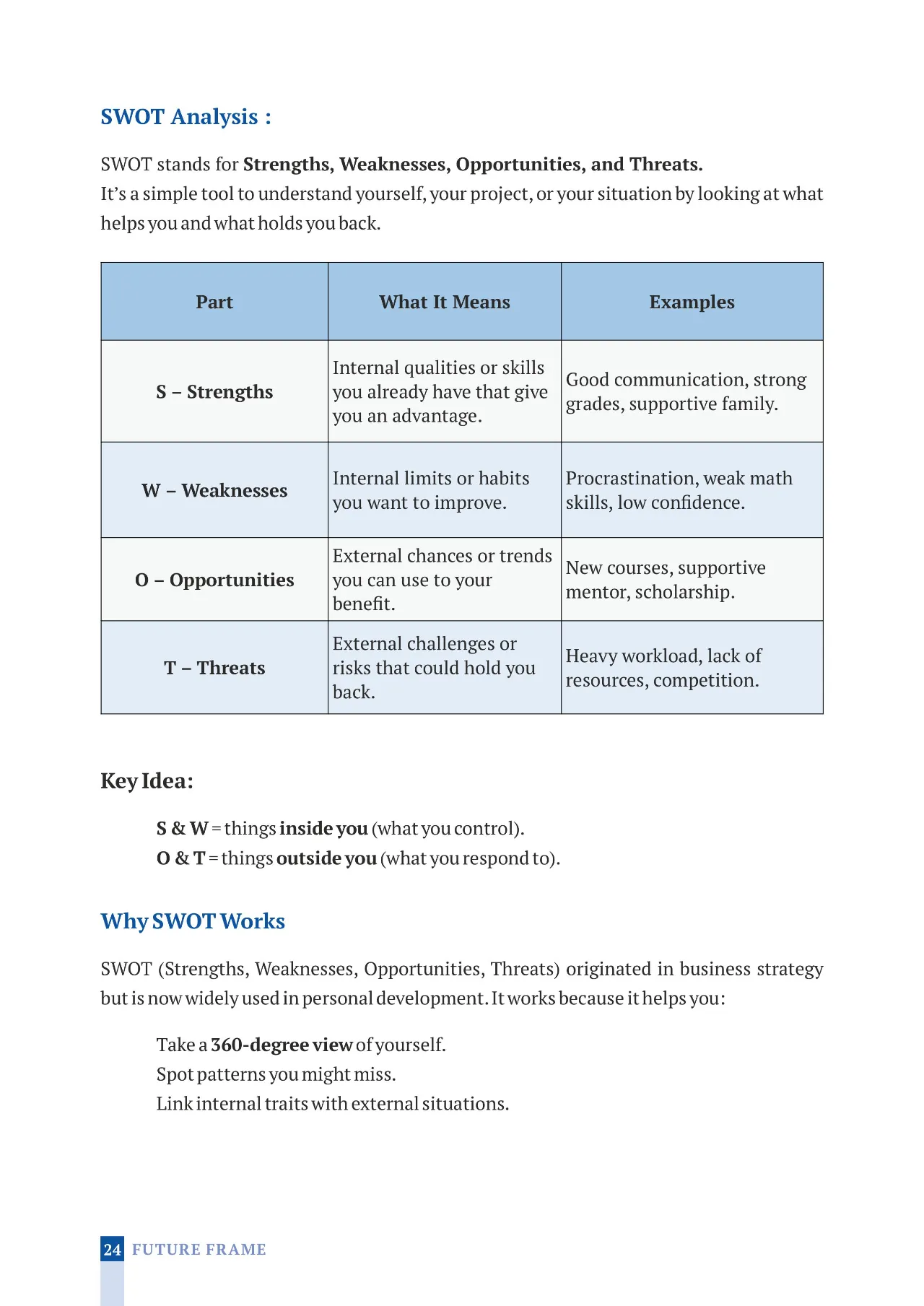
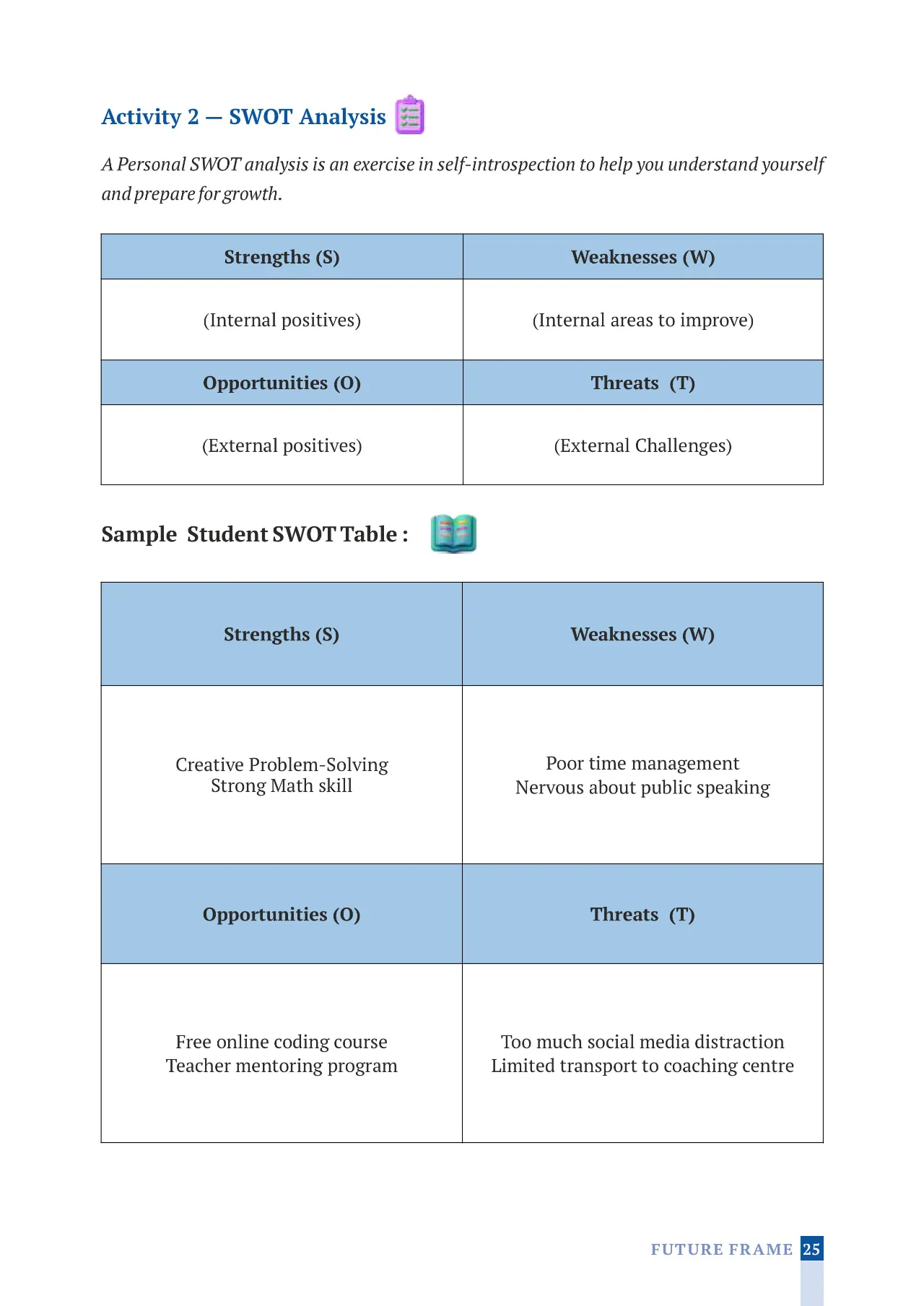
One of the most powerful chapters in the workbook. Students explore identity layers, strengths, weaknesses, core values, inspirations, emotional patterns, personal stories and beliefs. Tools like SWOT analysis and thought mapping reveal how their thinking shapes behaviour.
Outcome : Deep self-understanding — the foundation of real confidence.

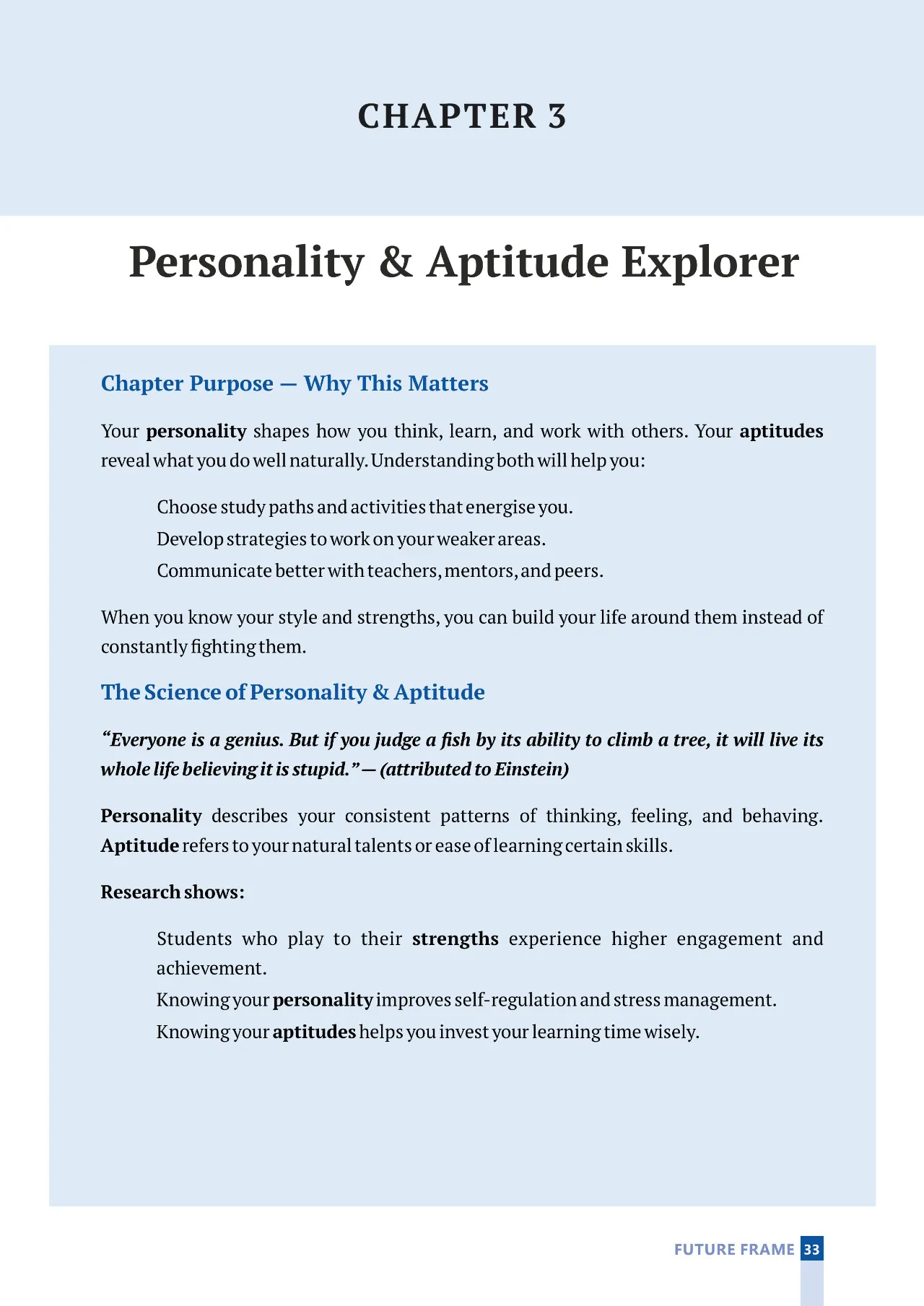
Chapter 3 — Personality & Aptitude Explorer

Students explore personality tendencies, interest patterns, learning preferences and natural work styles. They learn the difference between comfort zones and growth zones and begin to see what kind of future roles and environments suit them best.

Outcome: Awareness of where they naturally thrive — and which careers they may enjoy.

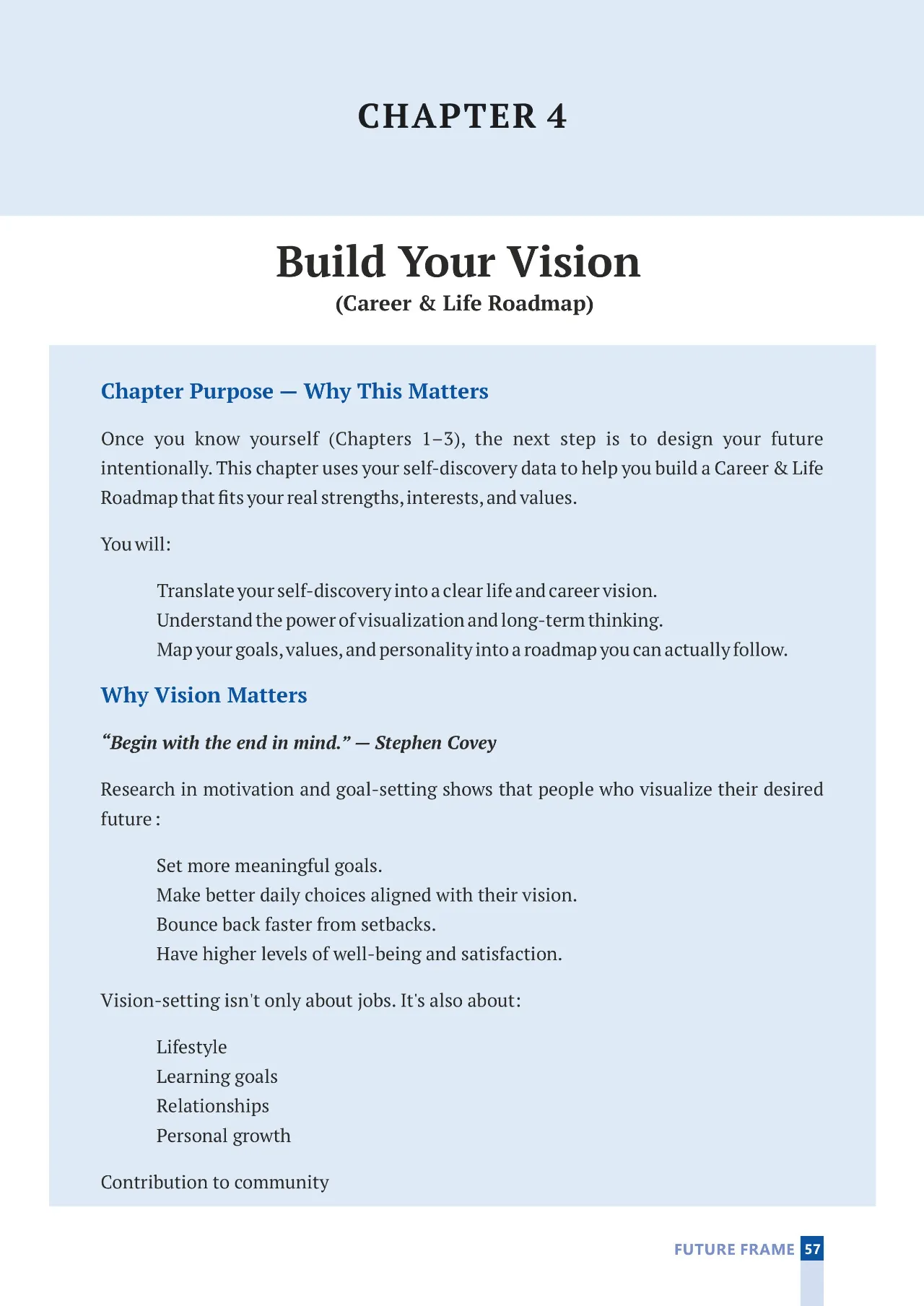
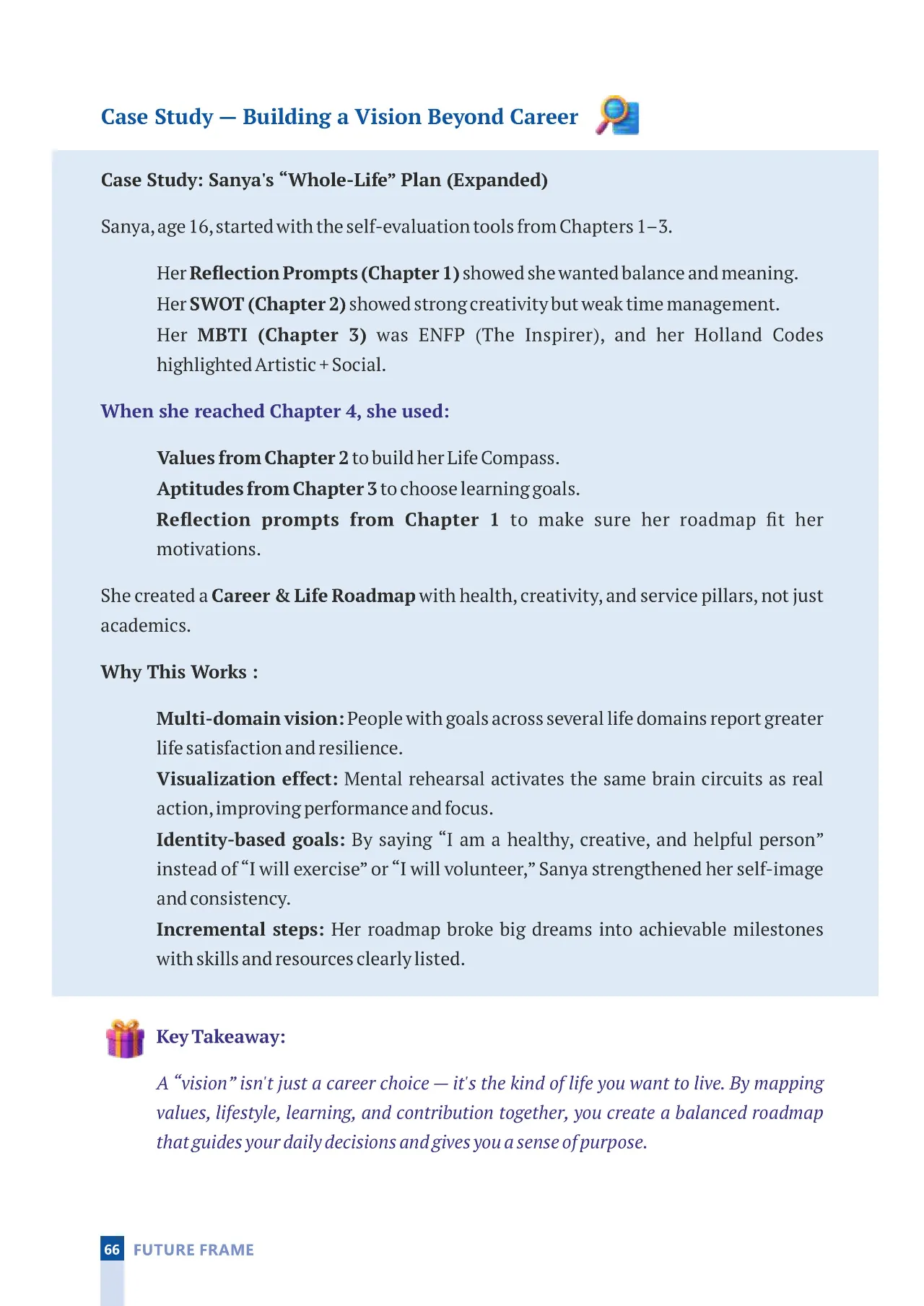
Chapter 4 — Build Your Vision (1–3–5 Year Plans)

Students design a Life Compass by combining their values and purpose. They create a future identity, build vision cards for academics, habits, skills, health, relationships and contribution, and lay out 1-year, 3-year and 5-year plans — including a visual vision board.

Outcome:Long-term thinking replaces fear and confusion about the future.

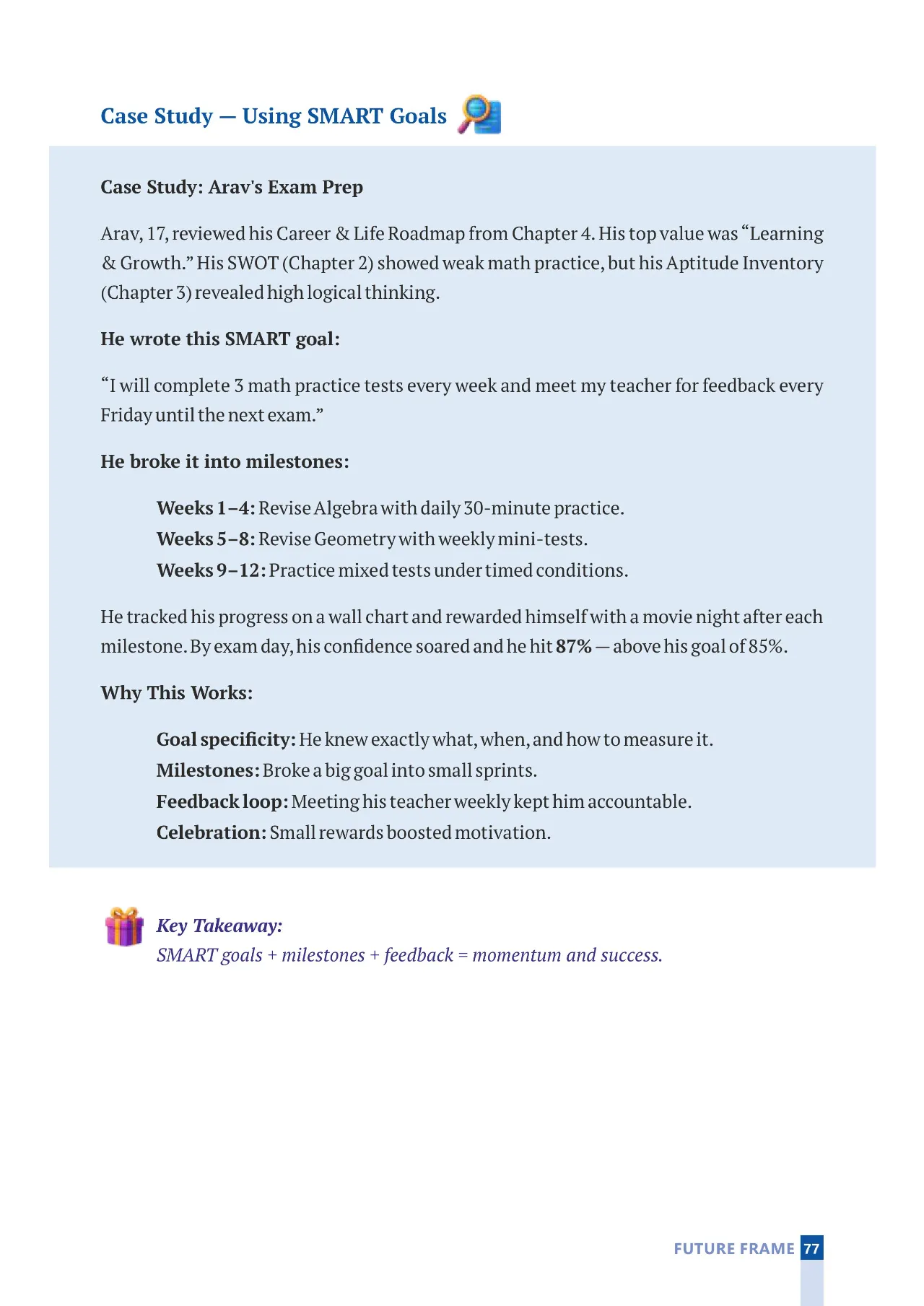
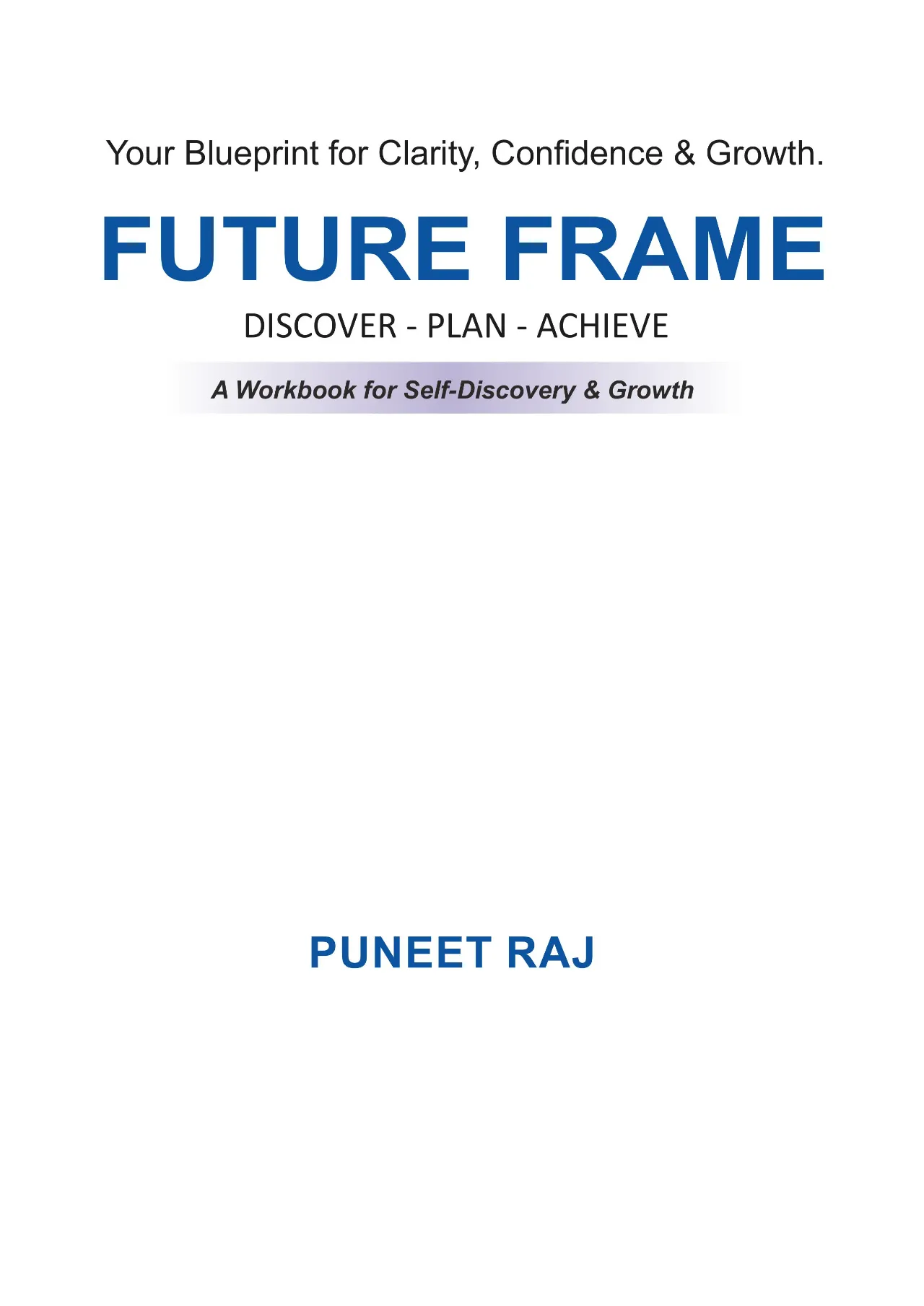
Chapter 5 — SMART Goals & Milestones

Students learn how to turn their dreams into SMART goals, break them into milestones, identify obstacles and resources, and build accountability and tracking systems.

Outcome : Clear direction, discipline and structured achievement.

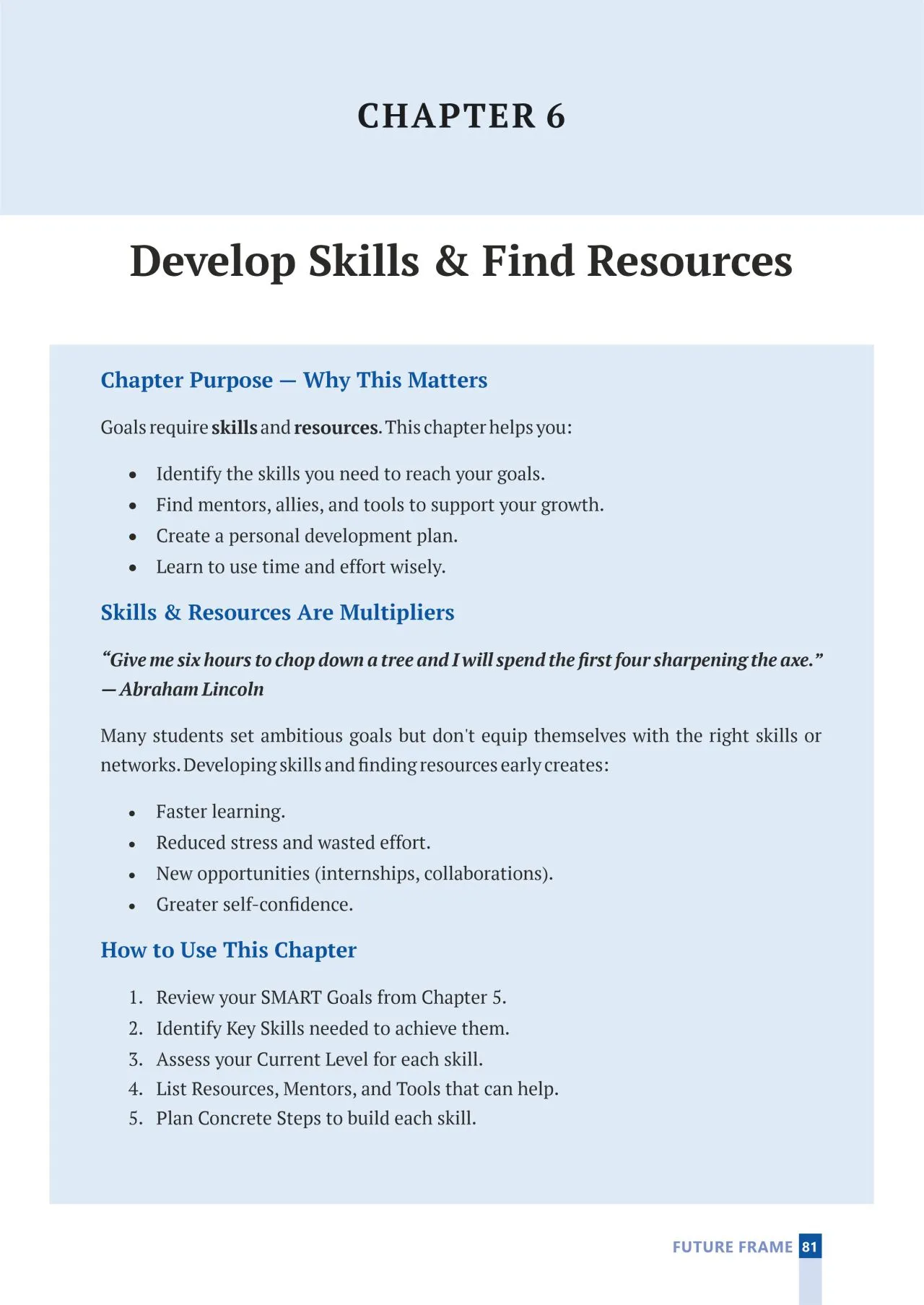
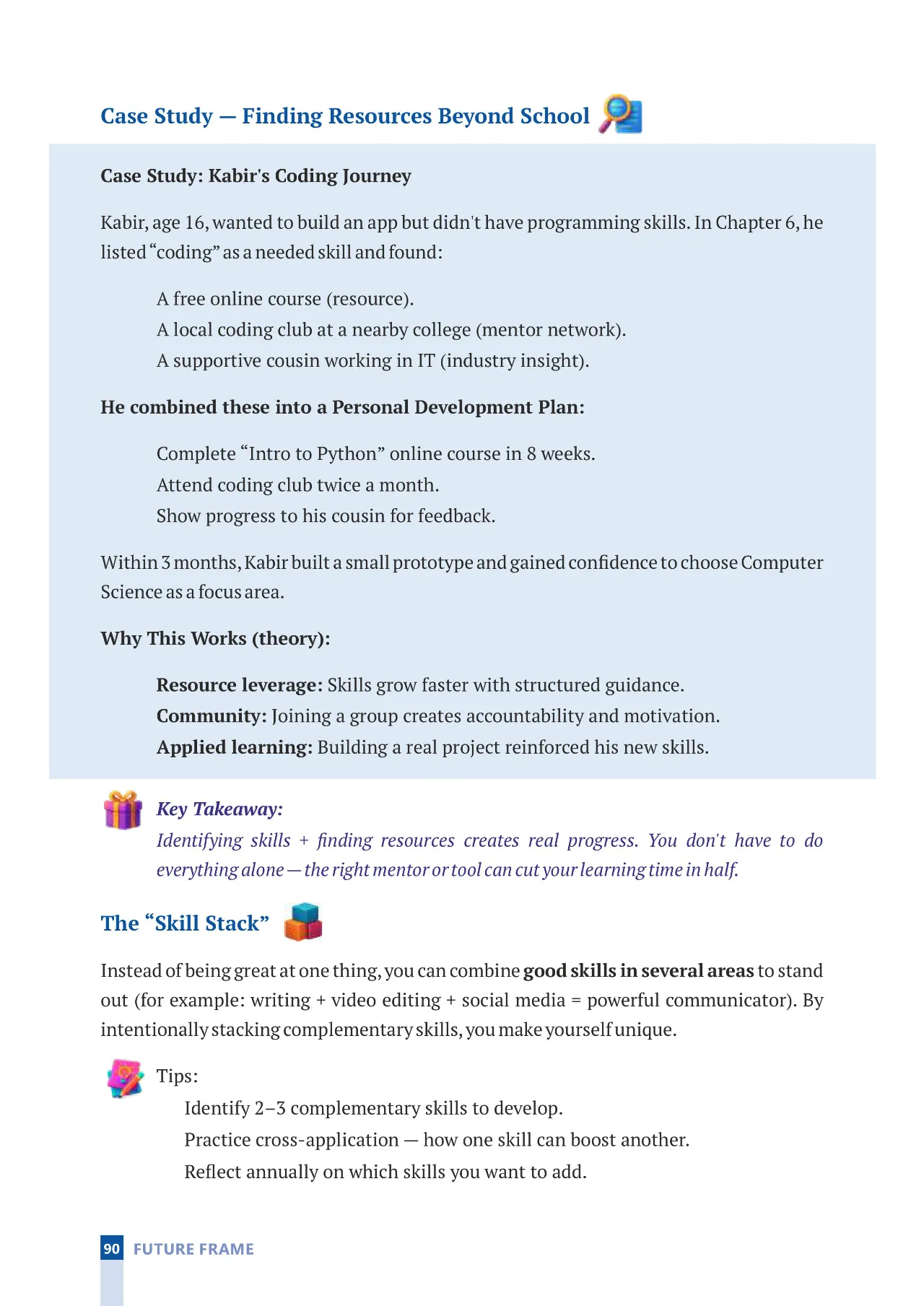
Chapter 6 — Develop Skills & Find Resources

Students explore essential 21st-century skills, assess their current levels, identify gaps and list the people, platforms and tools that can help them grow. They then design a personal skill-building plan.

Outcome : Future readiness, confidence and a proactive learning mindset.

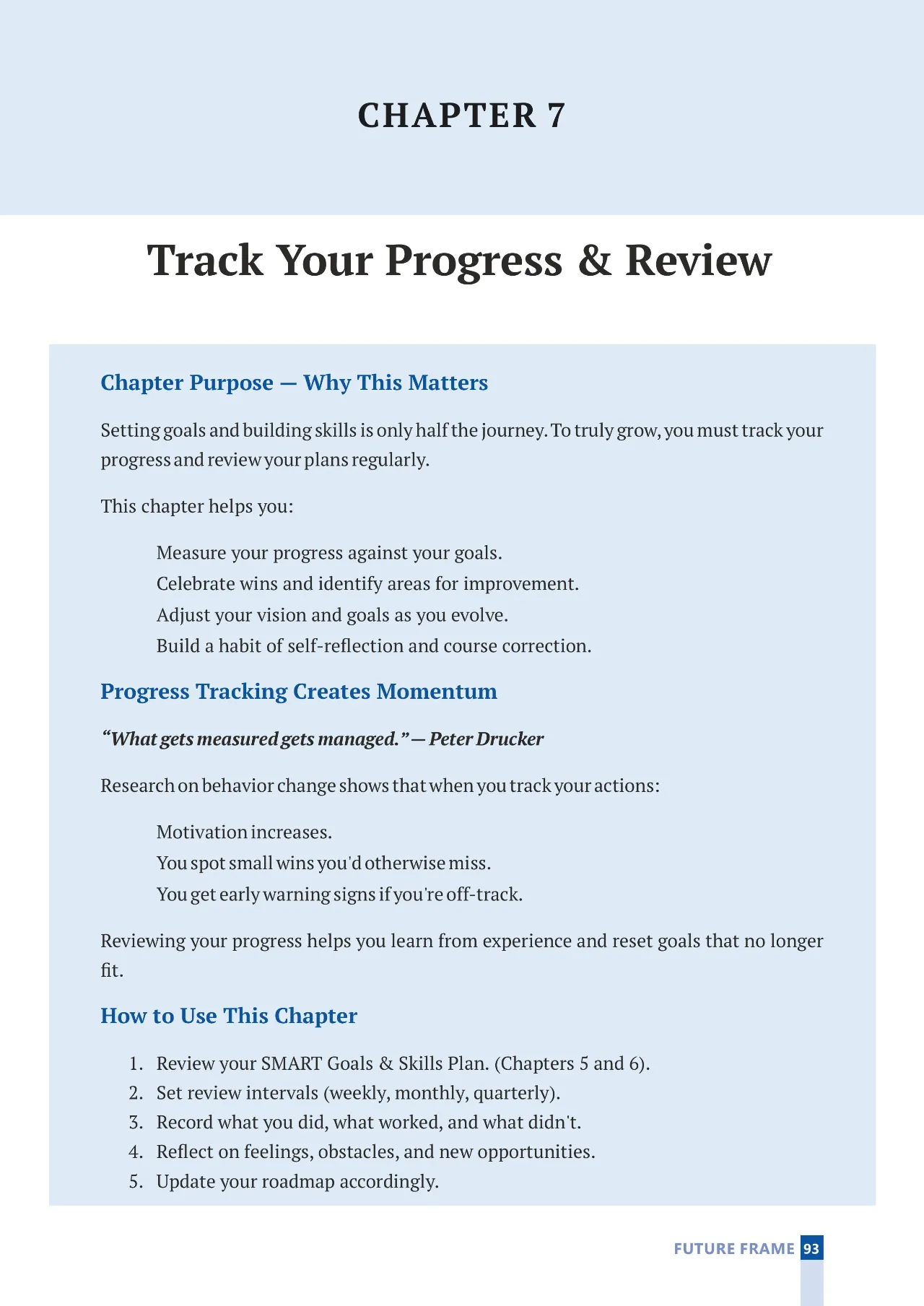
Chapter 7 — Track Your Progress & Review (Academic & Behaviour Planning)

Students create weekly study plans, monthly calendars and exam strategies. They also design distraction-control systems, behaviour improvement plans and classroom responsibility frameworks.

Outcome : Better marks, less stress, improved consistency and behaviour.

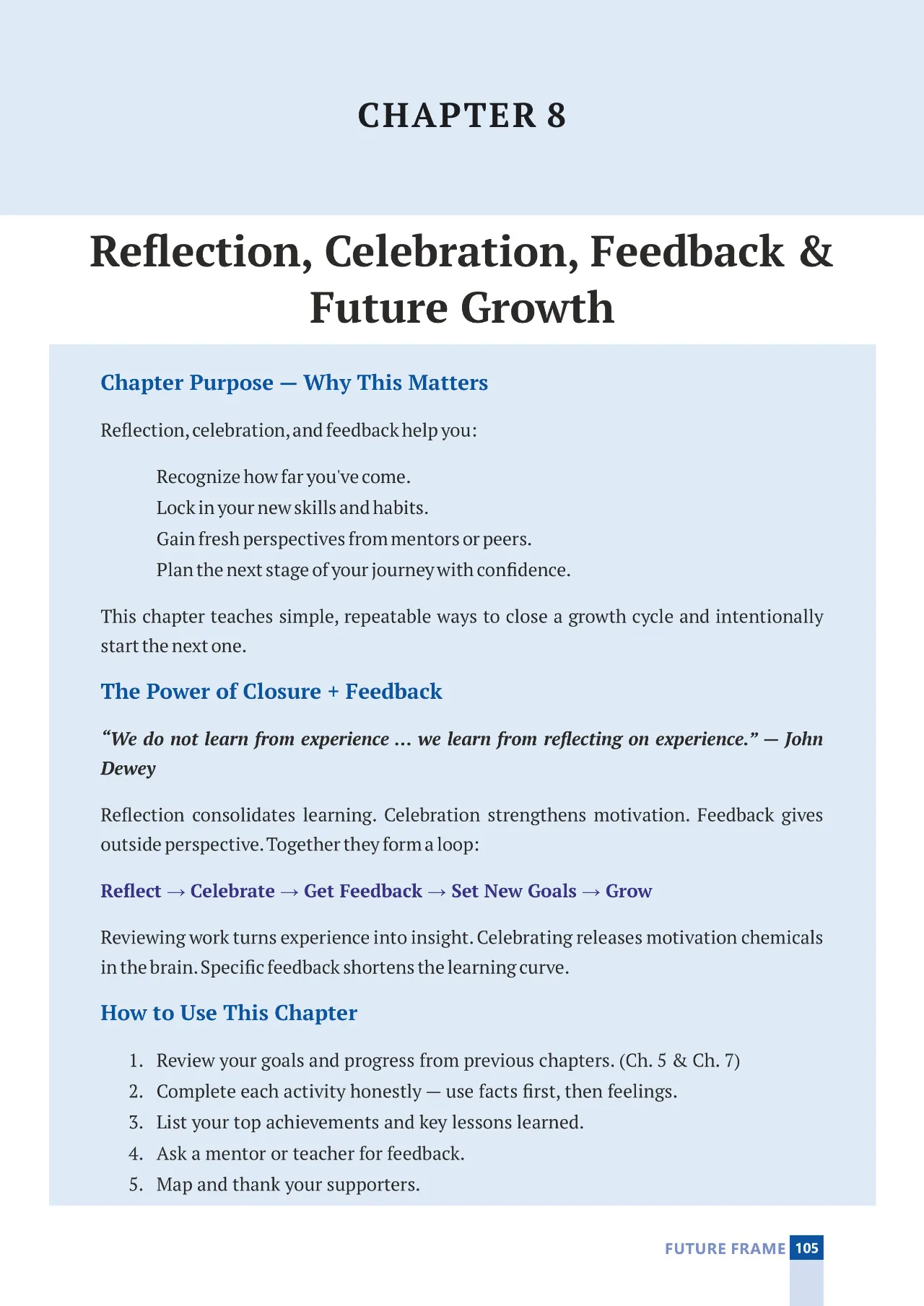
Chapter 8 — Reflection, Celebration, Feedback & Future Growth

Emotional intelligence is strengthened through reflection exercises, emotional check-ins, gratitude practice, behaviour logs, thought reframing and mindset development.

Outcome : Resilience, calmness and better decision-making.

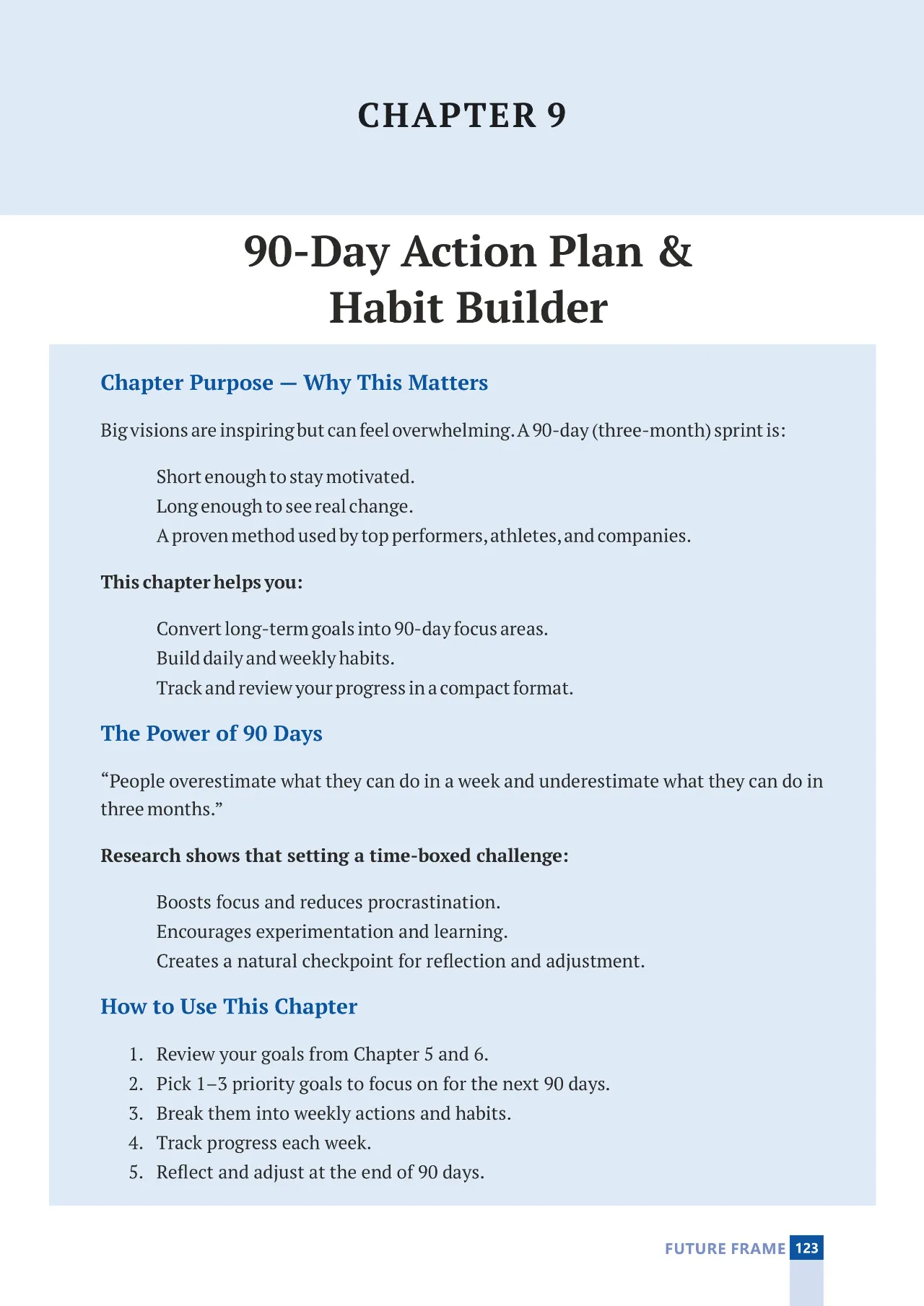
Chapter 9 — 90-Day Action Plan & Habit Builder

Students build daily habits, weekly action targets, progress trackers, accountability checklists and reward systems to reinforce consistent behaviour.

Outcome : Real behaviour change — students become consistent, disciplined and confident.

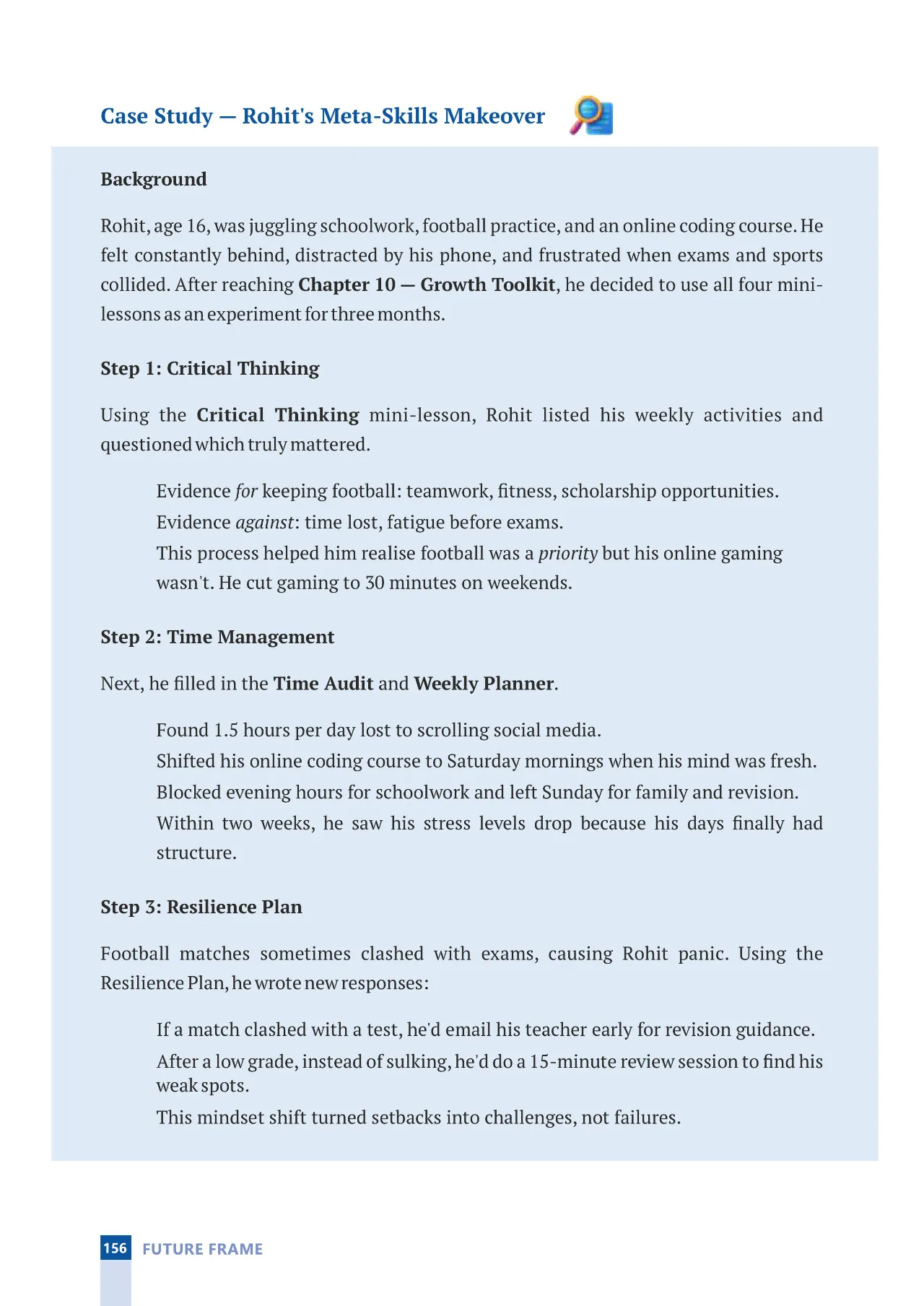
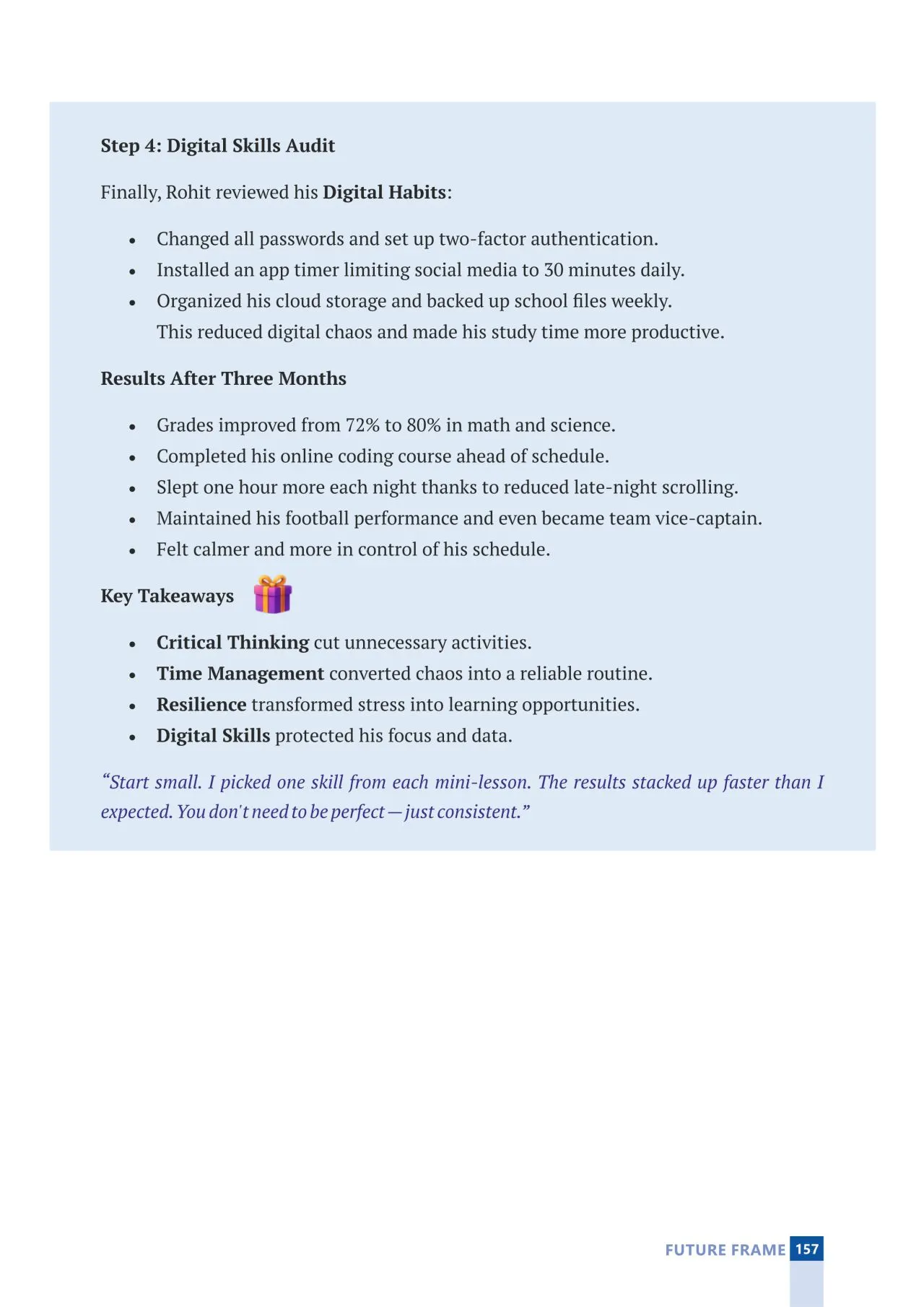
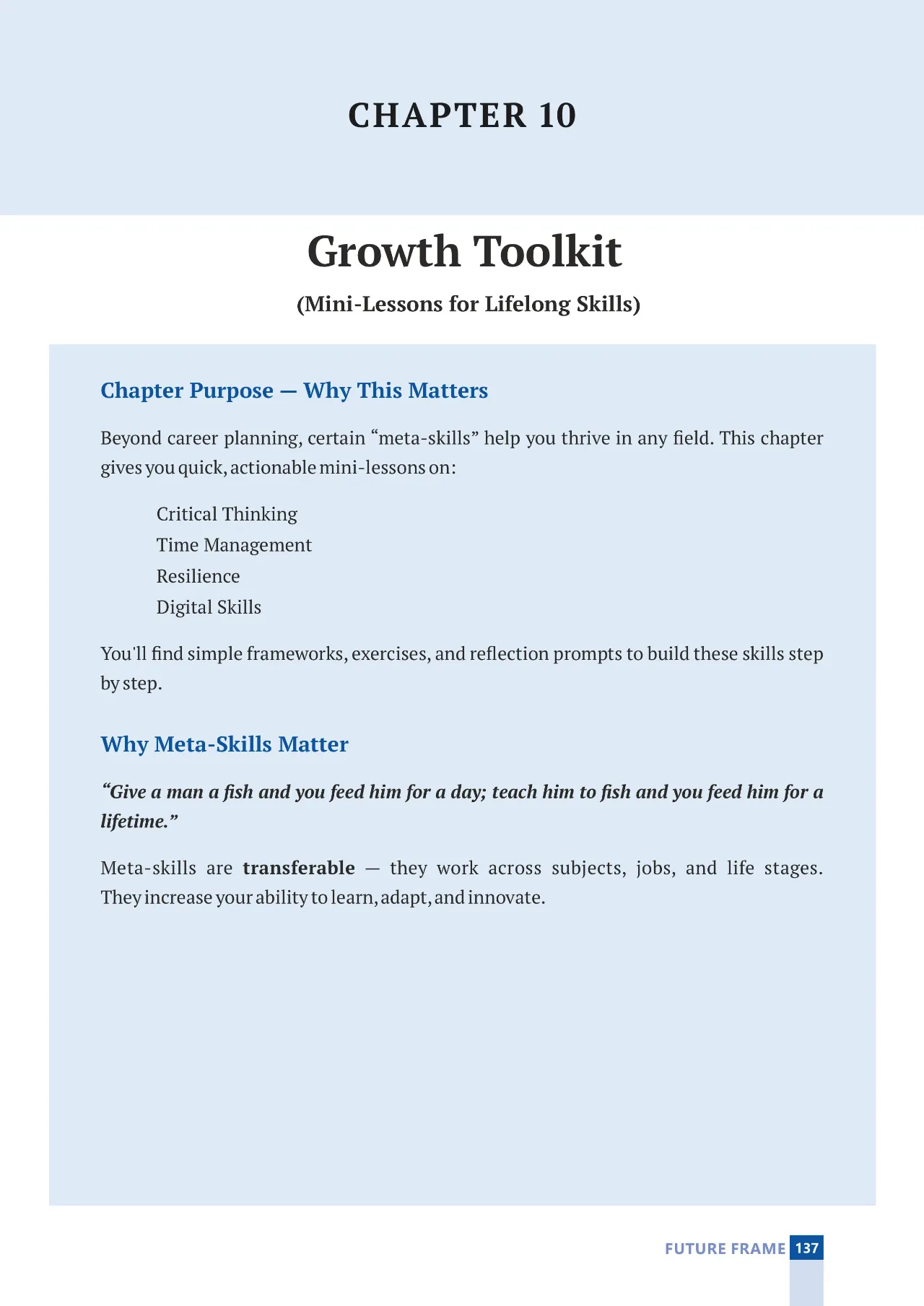
Chapter 10 — Growth Toolkit

Advanced life-skill modules on critical thinking, problem-solving, digital wellness, stress management, decision-making, communication skills, study techniques and resilience-building.

Outcome : Students develop the skills needed to thrive in school and in life.